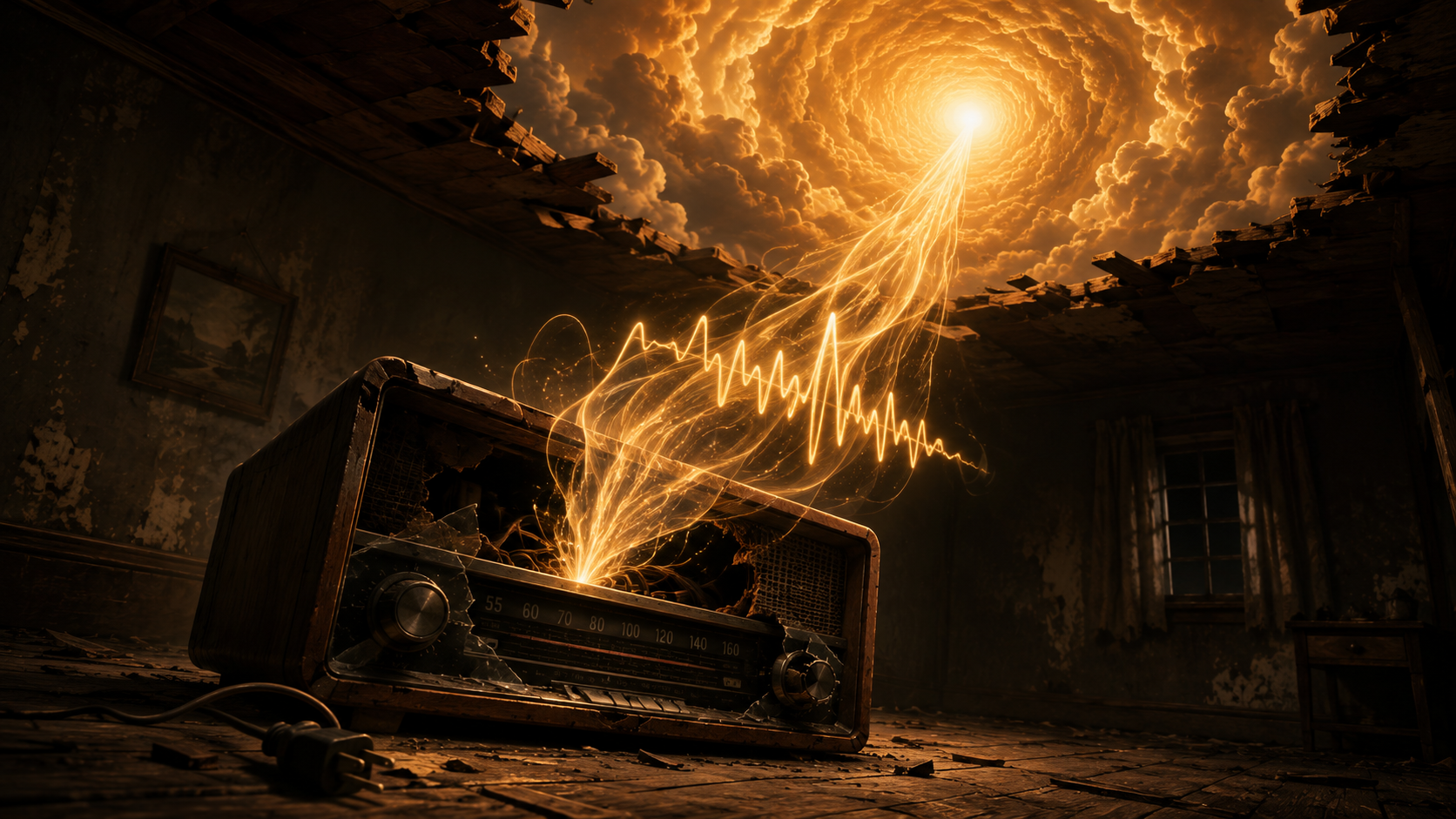
Staring at a flatlined EEG or a structurally damaged visual cortex and declaring that consciousness has died is the ultimate analytical failure. It’s the equivalent of looking at a smashed, silent radio on the floor and concluding that radio waves no longer exist. The radio never generated the music. It translated an invisible broadcast into sound.
When it comes to near-death experiences, mainstream materialist science has spent decades trapped inside the broken radio. Skeptics lean on comfortable, reductionist explanations to dismiss standard NDE accounts — oxygen deprivation, random neuronal misfires, chemical dumps in a dying brain.
But there is one razor-sharp focus point in consciousness research where every one of those biological explanations collapses at once: NDE blind vision.
When a person who has been completely blind from birth leaves their physical body during clinical death and accurately perceives real-world geometry, color, and events, the skeptics are instantly out of ammunition. You cannot hallucinate in a language you have never spoken. You cannot misfire visual memories your brain never possessed. As an intelligence analyst trained to strip away noise and find the signal, I can tell you that NDE blind vision isn’t just a fascinating medical anomaly. It is strategic proof that sight belongs to the soul — and the physical eyeballs are nothing more than temporary, imperfect lenses.
Table of Contents
The Historical Footprint: The Legacy NDE Blind Vision Accounts
Skeptics love to isolate data. They treat the evidence for non-physical perception as a closed, dusty file of historical anomalies. For years, the cornerstone of NDE blind vision research was the landmark study by Dr. Kenneth Ring and Sharon Cooper, published in the Journal of Near-Death Studies and compiled into their book Mindsight. They documented 31 blind individuals, and two of those accounts have become the reference cases in the field:
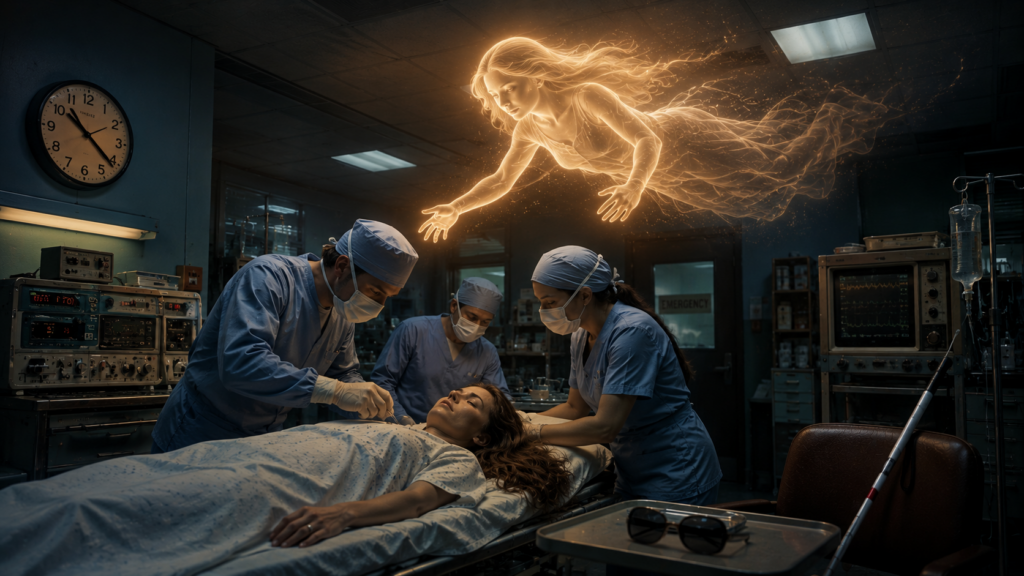
Vicki Noratuk. Born completely blind with atrophied optic nerves, Vicki had no concept of light, shape, or visual imagery — not even in her dreams. After a catastrophic car crash at age 22, she flatlined and found herself floating above her own body in the emergency room. She perceived her long hair, her distinctive wedding ring, and the medical team working on her body below. And her vision wasn’t ordinary sight — she described a 360-degree, omnidirectional, spherical awareness.
Brad Barrows. Also blind from birth, Brad suffered a medical emergency and rose to the ceiling of his room. From that vantage point, he watched his roommate — who was also blind — get up and navigate the hallway to find help. Brad visually tracked his roommate’s precise route through the facility, a detail later independently confirmed by staff.
Here’s why these accounts matter more than standard out-of-body reports. When a sighted patient looks down during an OBE and reports a specific surgical instrument, skeptics have an escape hatch: “they caught a glimpse before they blacked out.” But when a congenitally blind person describes a yellow gown or tracks a moving target down a hallway, that loophole doesn’t exist. These are upgraded veridical accounts — verifiable, real-world data acquired outside the range of any functioning physical sense.
The Macro Picture: Weaponizing the Volume
The skeptic’s primary weapon is the anecdote defense. Vicki and Brad get dismissed as isolated, unverifiable NDE blind vision stories from decades ago. But a strategic analyst doesn’t stare at isolated anecdotes. I look at the theater of operations. I look at volume.
Run the numbers on what is happening on planet Earth right now:
- Global population: approximately 8.3 billion people.
- The blind population: per World Health Organization data, roughly 43 million people worldwide meet the clinical criteria for blindness.
- NDE prevalence: statistical analysis consistently indicates that roughly 5% of the population will experience an NDE at some point in their lifetime.
Apply the prevalence rate across the theater and the math delivers its payload:
Roughly 2.1 million blind individuals alive today have had or will have a near-death experience at some point during their lives. Spread lifetime prevalence across a standard global life expectancy and you get approximately 15,000 NDEs occurring worldwide every single day — which means, proportionally, that about 78 blind people had an NDE yesterday. And the day before that. And today.
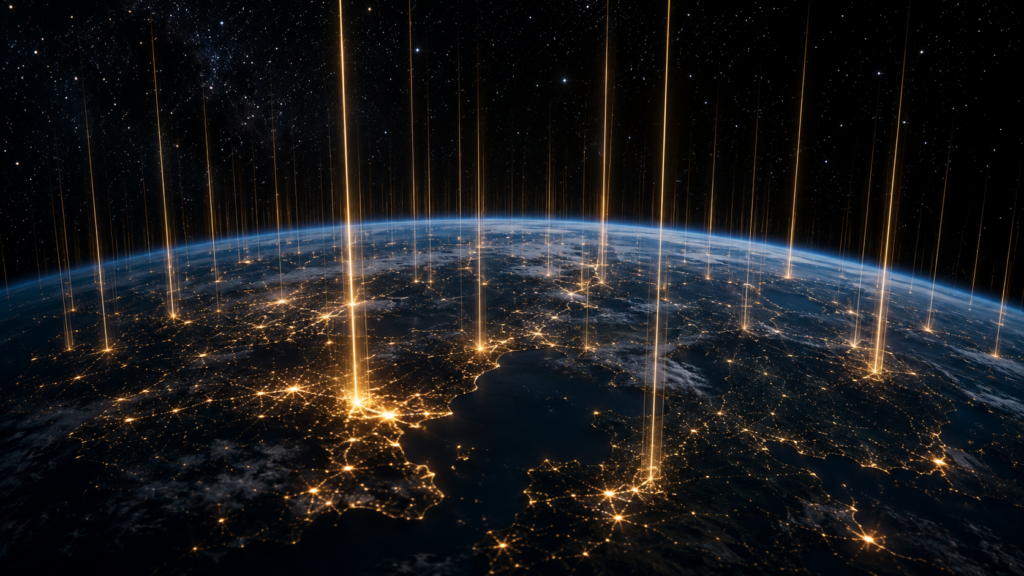
Now tighten the aperture to the gold-standard population — the congenitally blind, people with zero visual experience to draw on. They are a small fraction of the total blind population. Fine. Make it a brutally conservative fraction: even if only one in a hundred blind individuals was blind from birth, that still leaves tens of thousands of NDE blind vision cases alive right now — congenitally blind people who have had or will have an NDE. The evidence pool isn’t a 1990s filing cabinet. It’s a living population that regenerates daily.
While academic skeptics are busy writing rebuttals to a study from thirty years ago, blind human beings across this planet left their bodies yesterday, bypassed their broken biology, and took a direct look at reality. The data is being generated faster than academia can log it.
The Linguistic Trap: When “Seeing” Is Knowing
There’s a point of confusion here that skeptics desperately claw at: some NDE blind vision experiencers report that they didn’t “see” in the way sighted people describe it.” They describe a profound spatial awareness, an instantaneous architectural layout of the room, an overwhelming perceptual presence.
As a trained SIGINT linguist who spent years translating intercepted signals, this makes perfect sense to me. Human vocabulary is a crude, three-dimensional tool built entirely to describe input from our physical meat-sack senses.
A soul detached from the body doesn’t use ghost eyeballs to peer at the world from a single pie-slice angle. It experiences omnipresent perception. The soul doesn’t look at a room — it knows the room. Distances, forms, colors, and objects arrive in consciousness instantaneously and from every direction at once.
When these individuals return and try to communicate that multi-dimensional reality, they slam face-first into a linguistic barrier. If they say “I knew where everything was,” the skeptic declares they didn’t really see. If they say “I saw it,” they’re merely compressing a transcendent, non-physical experience into the only words a sighted listener can process. Once the biological filter is removed, “seeing” and “knowing” are the same function. The skeptic isn’t catching an inconsistency. He’s watching a translation problem and calling it a lie.
The Holy Grail: The Grand Slam Case
In my recent investigative work on NDE miracle cures, I documented cases where people died of terminal illness, had an NDE, and returned to find their physical bodies healed. So the obvious question: does the grand slam case exist for NDE blind vision? A person born completely blind who has an NDE, experiences soul-sight, and returns with permanent physical vision restored to their biological eyes?
From a clinical and investigative standpoint: no. There is no documented, medically verified NDE blind vision case of a congenitally blind person coming back with working physical eyes.
And as an analyst, that absence tells me everything I need to know.
If an NDE were merely a biological brain glitch — some surge of chemistry in a dying body — you’d expect a massive neurological event to occasionally jolt a broken optic nerve back to life. It never does. The neurological literature on sight restoration confirms that even when congenitally blind people gain physical sight through surgery, the visual processing structures of the brain don’t simply switch on. The physical radio stays broken.
Yet these same individuals experience flawless, veridical visual clarity precisely while their brains are flatlined — and return to total physical darkness the instant their hearts restart. That is not a healing event. That is a separation event. The sight never belonged to the meat-sack. The sight belongs to the signal.
The Analytical Verdict
The burden of proof is no longer on the NDE community to demonstrate that consciousness survives the body. The burden of proof is on the skeptics to explain how a brain with an unprogrammed visual cortex synthesizes flawless, verifiable, real-time spatial data during clinical death.
They can’t. Seventy-eight more data points arrived yesterday. The defense rests.
Postscript: A Call for Cases
If you were blind before your NDE — and you could see during it — you experienced NDE blind vision, and I want to hear your account.
I’m an investigator. I spent my career verifying claims, corroborating details, and separating signal from noise, and I bring the same tradecraft to NDE accounts. Not to debunk you, and not to rubber-stamp you — to document what happened to you properly, the way it deserves.
The academics stopped collecting these cases decades ago. I haven’t. If the math in this article is right, there are thousands of you out there. You’ve probably never told anyone who took it seriously.
I will.
Reach me directly: don@winnernde.com. Your account can be published with your name, anonymously, or not at all — your call. The interview happens on your terms.
Want to go deeper? Don Winner brings decades of intelligence and investigative experience to the biggest question there is: what happens when we die.
In You’re Going to Die Someday, Right? Near-Death Experiences Reveal What Happens Next, he examines the evidence from thousands of near-death experiences to find out what they actually tell us about consciousness, the soul, God, and the afterlife.
In Hell Exists, But Only for the Living, he investigates where our idea of hell came from and who built it, tracing the doctrine back to its human sources.
Get your copy of You’re Going to Die Someday, Right? or Hell Exists, But Only for the Living.