
A fear of hell can take over a quiet room. It can arrive at 2 a.m., after a funeral, during an illness, or while scrolling through a frightening account labeled a “distressing NDE.” The mind then does what frightened minds do: it turns one story into a verdict. Real hell anxiety relief starts by refusing that false verdict and separating two events that have been carelessly welded together for decades.
The first event is a Fear Coma Experience, or FCE. This is terror generated in a living brain under catastrophe: coma, delirium, extreme illness, injury, medication disruption, oxygen crisis, or overwhelming fear. Its imagery can be brutal, convincing, ancient, religious, and unforgettable. The second event is an authentic NDE: an experience during genuine clinical death, often peaceful and sometimes accompanied by veridical perception that can be independently checked.
They are not rival versions of the same thing. They are not a cheerful NDE and a dark NDE on a single sliding scale. One is a living person in neurological catastrophe. The other occurs when clinical death has taken place. If we want honest relief, we have to stop blurring the evidence.
Why Hell Anxiety Relief Requires Better Categories
The old phrase “distressing NDE” is the problem. It places terror imagery and authentic NDE evidence into the same folder before the investigation even begins. That is not a neutral description. It is a classification error.
An FCE can feel more real than waking life. That does not make it a report from the afterlife. Dreams can feel real. Delirium can feel real. A person in a fever, a coma, or a state of overwhelming neurological fear may encounter torture, darkness, monsters, judgment, confinement, or abandonment. The witness is not lying. The terror is not trivial. But the source of the imagery matters.
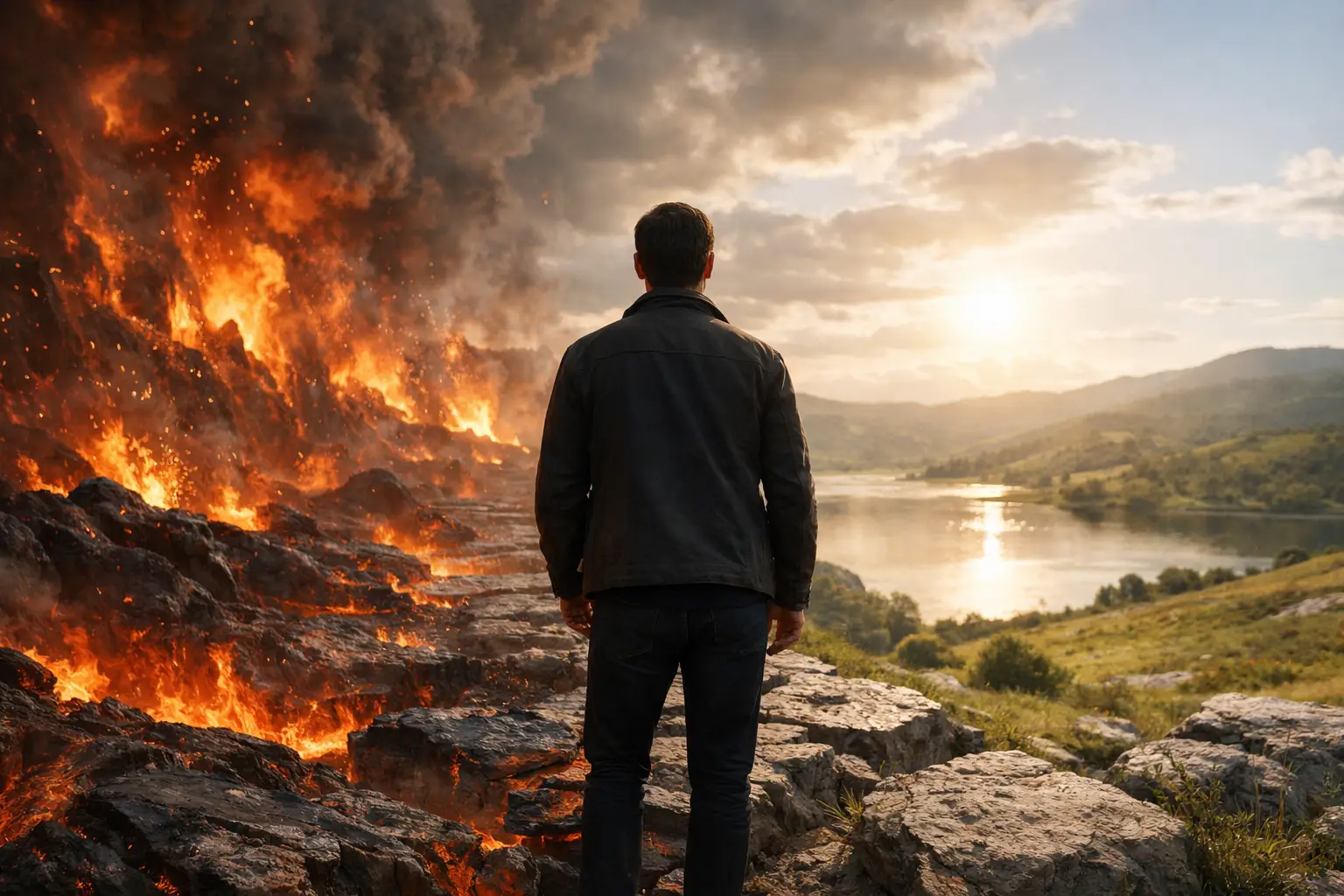
Hell, in this analysis, is real as an experience. It is real in the way a panic attack is real, a nightmare is real, or battlefield terror is real: it can leave a person shaken for years. But it belongs to the living human brain under extreme threat. It is not evidence that the dead are being tortured.
That distinction challenges two familiar camps at once. Religious fear culture treats terror stories as warnings from beyond. Materialist skepticism treats all extraordinary experiences as brain noise. Both approaches flatten the data. The first mistakes fear-coma imagery for an afterlife destination. The second ignores the verified perceptions and recurring structure that make authentic NDEs impossible to dismiss as mere confusion.
The evidence calls for two categories, not one vague label.
Fear Is Powerful Evidence of Fear, Not of Damnation
People with hell anxiety often make a perfectly human error: “If I can imagine it vividly, and if someone else says they saw it, it must be possible for me.” But vividness is not verification. Intensity is not location. A terrifying memory is not a map.
The human brain is built to prioritize threat. Under catastrophe, it does not calmly assemble a philosophical account of reality. It can produce total environments of danger, punishment, pursuit, and annihilation. Cultural material may provide the costumes. A person raised on fire-and-brimstone sermons may encounter fire and judgment. Someone with different symbols may encounter other forms of horror. The underlying machinery is fear.
This does not insult the person who had the experience. It respects them enough to distinguish what happened from what it means. An FCE survivor may need compassion, trauma support, sleep, medical follow-up, and room to tell the story without ridicule. What they do not need is a stranger converting their trauma into proof that every human being is at risk of eternal torture.
That move is not spiritual insight. It is fear spreading itself.
The NDE Evidence Is Not Hellscape Evidence
An authentic NDE has its own evidential profile. It occurs during genuine clinical death. It may include a clear awareness of separation from the body, encounters, a life review, and perceptions later verified against events the experiencer could not have known through ordinary senses.
That last category is load-bearing. Verified veridical perception is not a mood, a symbol, or an interpretation. It is an evidential problem for anyone claiming consciousness is simply absent or fabricated during clinical death.
A life review belongs only here. No clinical death, no life review. It does not belong to coma terror, ICU delirium, or an FCE. Confusing these events has done extraordinary damage because it allows commentators to take the most frightening material from a living brain in crisis and attach it to the strongest evidence that death is not the end.
The result is a Frankenstein theory: peaceful NDE features, terror imagery, theology, trauma, and speculation stitched into one alleged journey. It may make a dramatic story. It does not make a disciplined conclusion.
What About Accounts That Contain Both Terror and Peace?
This is where the Welded NDE matters. A person can suffer an FCE while alive and later undergo an authentic NDE during clinical death within the same medical emergency. With no ordinary clock between phases, the memories may fuse. The witness may understandably describe it as one continuous event.
That does not mean the categories failed. It means the event was complicated.
The investigator’s task is not to accuse the witness of inconsistency. It is to identify the sequence and test each element. Was there a period of genuine clinical death? Is there a later veridical perception that can be checked? Does the terror carry the chaotic, threat-saturated character of a living brain in catastrophe? A Welded NDE is rare, but it is far more honest than forcing every detail into the worn-out “distressing NDE” label.
For an anxious reader, this is more than terminology. It removes the false idea that a frightening segment contaminates the entire case or predicts an afterlife outcome. Terror before clinical death is not a sentence handed down after death.
Stop Treating Anxiety as a Warning System
Hell anxiety has a cruel habit: it presents itself as prudence. “What if this fear is a warning?” it asks. “What if being terrified proves I should be terrified?” That circular logic can keep a person trapped for years.
Anxiety is a signal that your nervous system believes danger is near. It is not a supernatural instrument calibrated to detect your eternal fate. The feeling of certainty that comes with anxiety is one of its oldest tricks. It makes a possibility feel like evidence and a thought feel like a prophecy.
When the fear rises, name the category plainly: “This is anxiety, not information.” If a horror account triggered it, ask the basic investigative question: Was this an authentic NDE during verified clinical death, an FCE in a living brain, or a Welded NDE requiring separation? Do not grant a viral story authority merely because it frightened you.
Then return to your body in the present. Slow your breathing. Put both feet on the floor. Speak with someone steady rather than someone who feeds dread. If intrusive thoughts, panic, sleep loss, or compulsive reassurance-seeking are controlling your days, bring in a licensed mental health professional. That is not a failure of faith or courage. It is a sensible response to suffering.
A Clearer View Is a Kinder One
The claim that hell belongs to the living is not sentimental. It is tougher than sentiment because it follows the available distinctions even when old labels collapse. It says that the worst terror a human can experience deserves attention, but it does not deserve to be weaponized into a doctrine of eternal punishment.
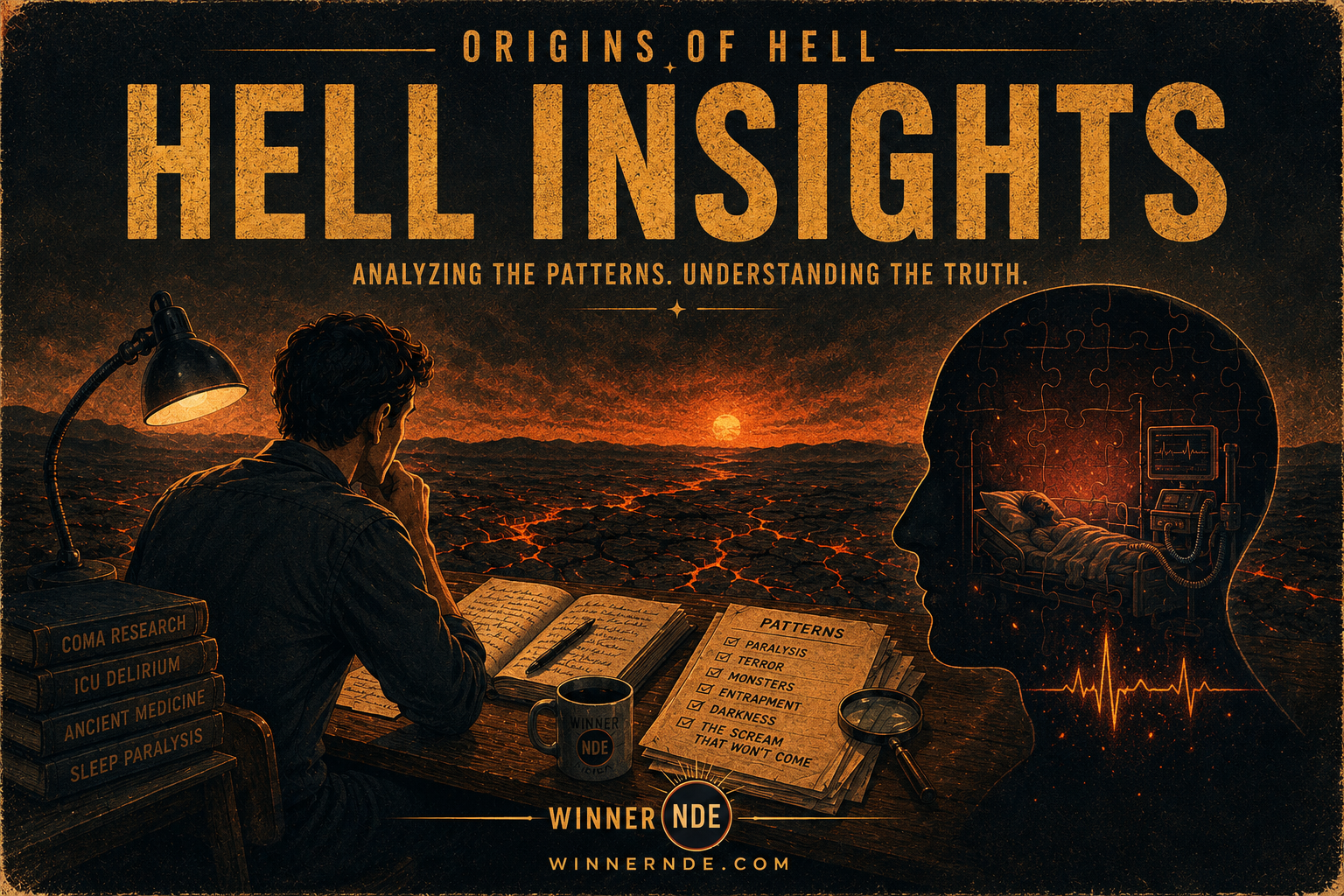
Don Winner’s Hell Exists, But Only for the Living examines this argument through coma research, fear, history, and reported cases without calling witnesses dishonest. That is the standard worth keeping: take people seriously, then investigate their interpretations with equal seriousness.
You do not have to solve every mystery about death tonight. You only have to stop allowing fear to impersonate evidence. The next time hell anxiety presses close, remember the line that changes the entire question: an FCE is a catastrophe of the living, not a destination of the dead.
Want to go deeper? Don Winner brings decades of intelligence and investigative experience to the biggest question there is: what happens when we die.
In You’re Going to Die Someday, Right? Near-Death Experiences Reveal What Happens Next, he examines the evidence from thousands of near-death experiences to find out what they actually tell us about consciousness, the soul, God, and the afterlife.
In Hell Exists, But Only for the Living, he investigates where our idea of hell came from and who built it, tracing the doctrine back to its human sources.
Get your copy of You’re Going to Die Someday, Right? or Hell Exists, But Only for the Living.