Can Consciousness Exist Without a Brain?
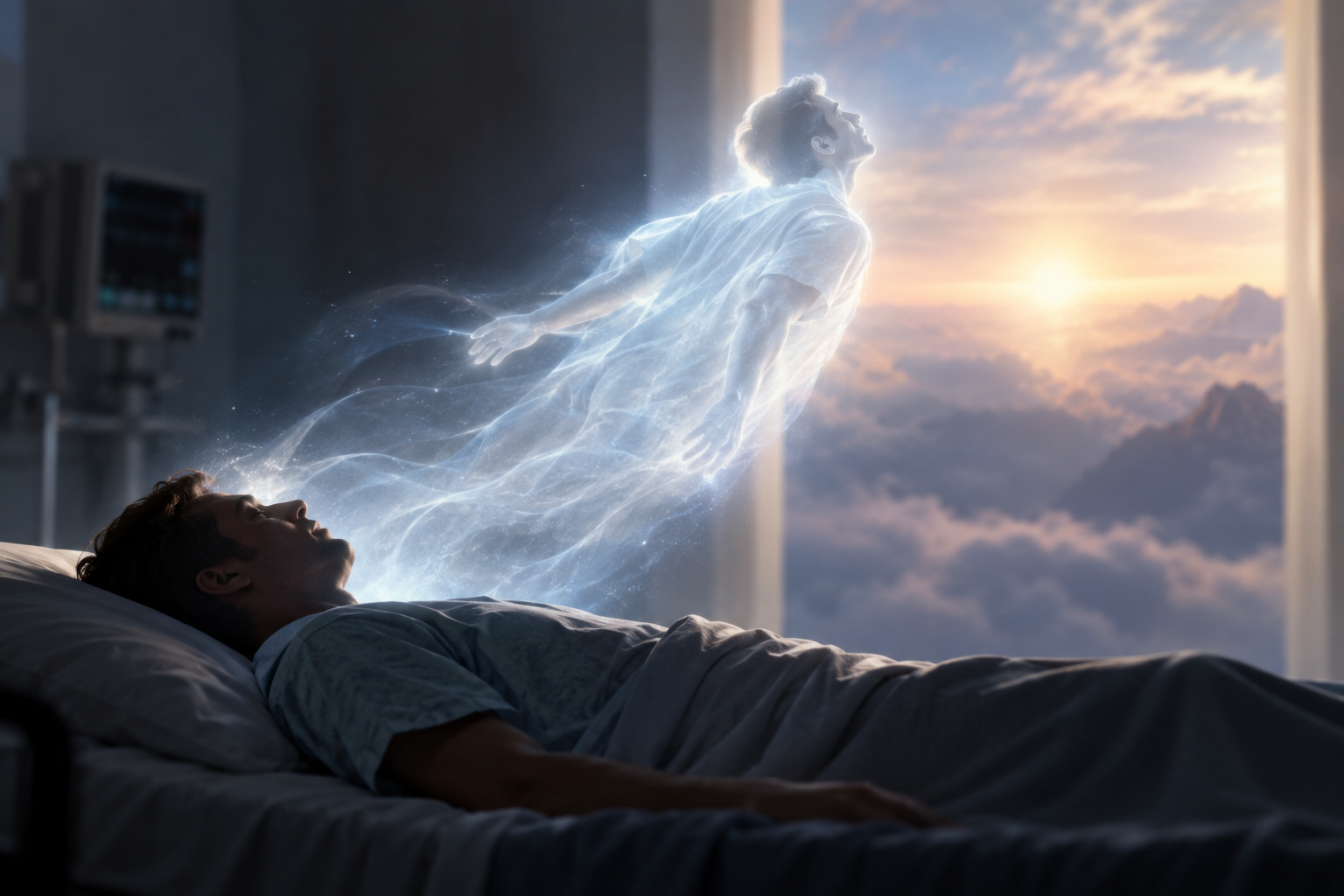
A patient lies unconscious, sometimes under deep anesthesia, sometimes in cardiac arrest, sometimes with brain function severely compromised. Yet later the patient reports a lucid conversation, a medical instrument, a relative in another room, or events that occurred while no normal sensory pathway should have been available. Can consciousness exist without brain activity? The evidence from the strongest near-death cases says the question is no longer philosophical decoration. It is a direct challenge to the claim that the brain manufactures the mind.
Materialism has a simple answer: no brain, no consciousness. It sounds decisive because every ordinary experience of life comes through a functioning brain. Damage the brain and memory can change. Alter brain chemistry and perception can change. Put someone under anesthesia and their normal awareness disappears.
But this is not the kill-shot materialists think it is. Every one of those observations shows that the brain is involved in consciousness. None of them shows that the brain produces it.
The Brain Correlation Is Not Brain Creation
The brain is plainly involved in human experience. No serious investigator needs to deny that. It filters perception, stores much of our autobiographical memory, and allows consciousness to speak, move, and operate in the physical world. The real dispute is over a much larger leap: does dependence on the brain for earthly expression prove consciousness is produced by the brain?
It does not.
Correlation tells us two things change together. It does not settle which thing causes the other, or whether a third relationship is involved. Under anesthesia, awareness disappears from the outside observer’s view and the patient reports nothing afterward. That is consistent with consciousness being switched off. It is equally consistent with consciousness continuing while the machinery for forming and reporting memory is offline. The observation cannot tell those apart.
Skeptics often treat that as wordplay. It is not. It identifies a genuine logical problem. A brain-consciousness correlation is exactly what we would expect if the brain generates consciousness. It is also exactly what we would expect if the brain is required to express and record consciousness during bodily life, without being its source.
To choose between those models, investigators must look for situations in which consciousness appears to operate when the brain model predicts it should not. That is where near-death experience evidence matters.
Can Consciousness Exist Without Brain Function?
The strongest NDE reports are not simply stories of tunnels, lights, or peace. Those experiences may be meaningful, and their recurring patterns are themselves worthy of attention. But the harder evidence is veridical perception: a person reports accurate details from a location or period they could not plausibly observe through ordinary senses.
These cases demand disciplined review. Was the detail recorded before the patient could be coached? Was it specific, rather than a lucky generality? Could staff, family, or prior knowledge explain it? Is the timeline secure? Were the witnesses independent? An investigator should reject weak accounts, embellished retellings, and claims that collapse under basic fact-checking.
Even after those exclusions, the anomaly remains.
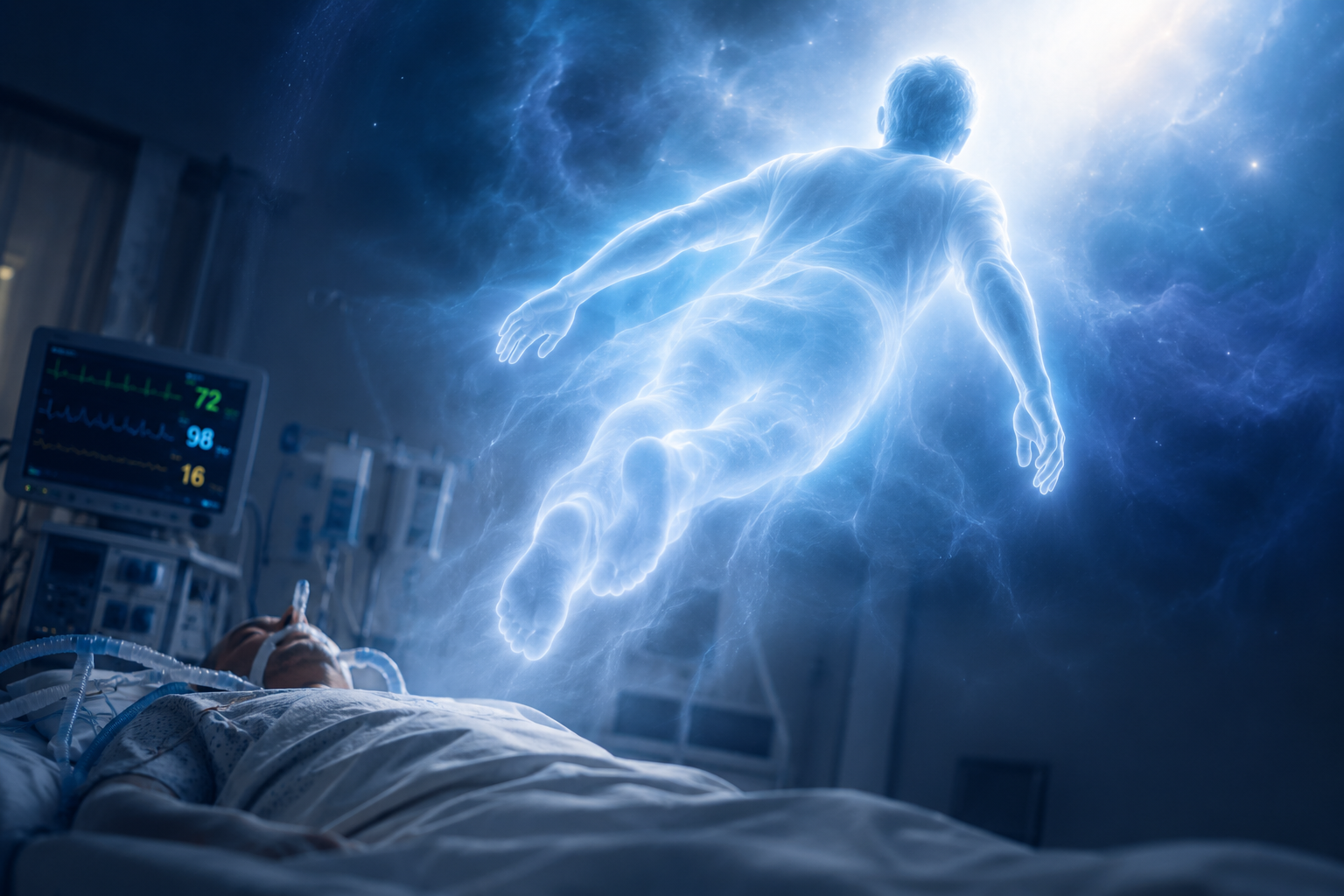
Reports from cardiac-arrest survivors are particularly difficult for the reductionist account because they can include highly organized awareness during a period of severe physiological crisis. The person may later describe the resuscitation from a viewpoint above the body, report who entered the room, identify an unusual action, or recount conversation occurring away from the bedside. Not every report is verified. No honest researcher should pretend otherwise. But one verified case is not canceled by a hundred unverified ones. Evidence is weighed by quality, not by a popularity contest.
The materialist response is usually that the experience occurred just before or just after the crisis, when some residual brain activity remained. Sometimes that may be true. It is a reasonable possibility in an individual case. But it is not a universal explanation, especially when the reported perceptions align with a period of unconsciousness and include details unavailable from the bed.
A theory is not saved by endlessly moving the event to an unobserved moment. If the explanation cannot specify when consciousness occurred, how it acquired accurate external information, or why the experience is often clearer than ordinary waking life, then it is not an explanation. It is an escape hatch.
Lucidity Is the Problem
The quality of many NDEs is as significant as their content. People describe heightened clarity, coherent thinking, panoramic memory, intense emotion, and a sense of being more awake than they have ever been. This is the opposite of what we expect from a brain failing through oxygen deprivation, drug effects, delirium, or chaotic electrical activity.
A damaged brain can generate confusion, fragmented imagery, terror, and disorientation. It can also generate vivid experiences. That fact should make us careful. It does not, however, explain why so many NDE accounts report ordered consciousness, lasting personality changes, reduced fear of death, and closely repeated features across cultures and decades.
The claim that a dying brain creates a final hallucination is often presented as science. Usually it is a label pasted over a mystery. Calling an experience a hallucination does not explain its structure, its aftermath, or its occasional verified observations.
The Distressing-Experience Objection
Readers who have encountered frightening accounts deserve a better answer than denial. Some people awaken from coma, delirium, traumatic illness, or altered states with terrifying memories. Those witnesses should be treated as honest. Their experiences can be devastatingly real to them.
But terror alone does not establish an encounter with an eternal realm of punishment. The evidence points toward a critical distinction: a distressing experience in a compromised living brain and an authentic NDE are not the same event merely because both occur near medical catastrophe.
In the former, the signature may be confusion, shifting scenes, paranoia, pain, threat, and neurological disorganization. In the latter, the recurring signature is often lucidity, coherence, separation from the body, encounter, review, and a transformative return. Reality is messy, and not every case falls into an easy box. Still, collapsing all extraordinary medical experiences into one category is a research error.
That distinction is central to Don Winner’s work on the origins of hell. It allows compassion for people who suffered terrifying brain-based experiences without turning those experiences into evidence that the universe is designed to torture the dead.
What Skeptics Still Need to Explain
The case for consciousness beyond the brain does not rest on asking readers to abandon science. It asks science to follow its own rules when the data are inconvenient. The hypothesis of brain-produced consciousness carries a burden of explanation. It must account for accurate perceptions without sensory access, organized experience under extreme impairment, and the remarkable consistency of core NDE features across radically different backgrounds.
Skeptics are right to demand documentation. NDE researchers should welcome that demand. But skepticism becomes dogma when it accepts any speculative neurological story, no matter how incomplete, while treating a carefully corroborated report as impossible by definition.
There is also a human cost to that double standard. When a grieving person is told that their loved one’s final lucid experience was merely chemical noise, the statement is often delivered with the confidence of established fact. It is not established fact. Consciousness remains one of the deepest unsolved problems in science, and NDE evidence exposes the weakness in the assumption that matter has already solved it.
The Most Reasonable Reading of the Evidence
Can consciousness exist without a brain? The evidence does not prove every religious image of the afterlife, nor does it give us permission to treat every extraordinary claim as true. It does something more important: it shows that the materialist conclusion is premature.
When consciousness appears capable of perception and coherent experience beyond the body’s ordinary limits, the rational response is not to force the data back into an inadequate model. It is to revise the model. The brain may be indispensable for a human life in the physical world without being the source of the conscious self.
That possibility is not an invitation to fear death. It is a reason to look at death with more intellectual honesty and less manufactured despair. The data do not show consciousness ending when the brain stops. They show it continuing when the brain, by every measure available to us, should not be able to sustain it.
Want to go deeper? Don Winner brings decades of intelligence and investigative experience to the biggest question there is: what happens when we die.
In You’re Going to Die Someday, Right? Near-Death Experiences Reveal What Happens Next, he examines the evidence from thousands of near-death experiences to find out what they actually tell us about consciousness, the soul, God, and the afterlife.
In Hell Exists, But Only for the Living, he investigates where our idea of hell came from and who built it, tracing the doctrine back to its human sources.
Get your copy of You’re Going to Die Someday, Right? or Hell Exists, But Only for the Living.