The Soul or Spirit
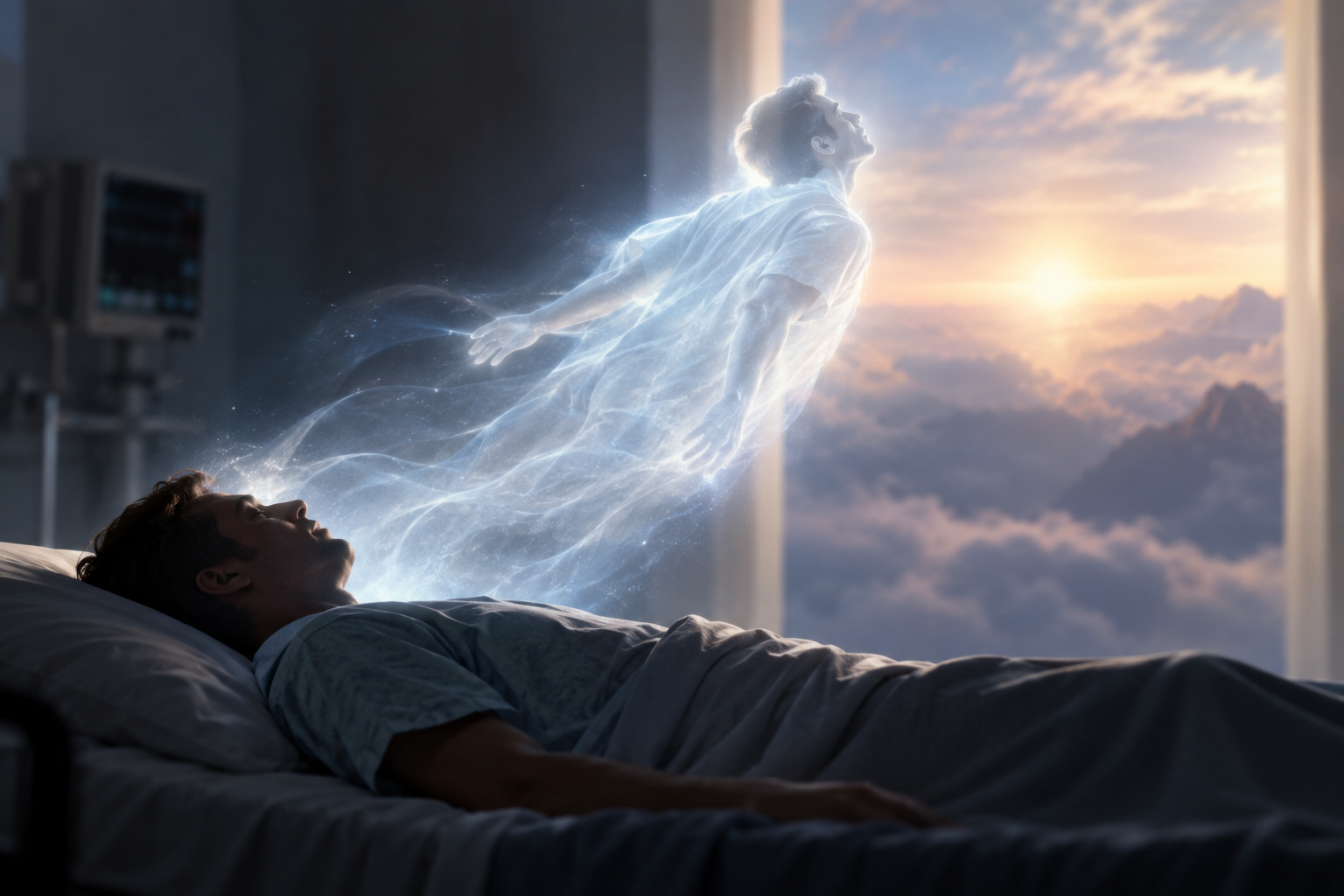
The previous two articles established something fundamental about the Near-Death Experience. The physical body is dead, yet the person reports continuing to exist outside it. They think, remember, observe, make decisions, and recognize themselves as the same individual they were before death. The body has been left behind, but the person has not.
That leaves an obvious question: what exactly is still there? Humans have been trying to answer that question for thousands of years, and we have created many different words for whatever remains. Soul, spirit, psyche, ruach, pneuma, atman, chi, ka, mana, manitou, and consciousness are all attempts to describe some aspect of a person that is not simply the physical body.
For purposes of this project, I am going to call it the soul. I will occasionally use spirit or consciousness interchangeably because I am not particularly interested in theological arguments over terminology. I am interested in what the NDE data tells us about the conscious individual who remains after the physical body is gone.
What Is the Soul?
If we strip away thousands of years of religious doctrine and simply follow the NDE reports, the soul is surprisingly easy to define. It is the conscious individual who remains after separation from the physical body. We may not know what it is made of or how it works, but we can describe what experiencers consistently report that it does.
The soul thinks and remembers. It observes, recognizes people, experiences emotion, communicates, and makes decisions. Most importantly, the experiencer continues to recognize themselves as the same individual who occupied the physical body before death. They do not report that their identity ended and some new consciousness took its place. They report continuity.
That continuity is important. If everything we call consciousness is entirely produced by the physical brain, then when the biological system producing it stops working, the conscious individual should disappear with it. There should be no observer outside the body, no continuing memory, no decisions being made, and no sense of self remaining after death.
That is not what NDE experiencers report. The location of their consciousness changes and the way they perceive their surroundings changes, but the individual remains. The body they had identified as themselves for their entire physical life is suddenly somewhere else, yet the person looking at it still knows exactly who they are.
That continuing individual is what I mean by the soul. The word itself is less important than the phenomenon it describes.
An Ancient Idea With an Obvious Source
The concept of a soul is ancient, but there is nothing particularly mysterious about how humans could have developed it. People have been dying for as long as there have been people, and some of them recovered and described what happened while everyone around them thought they were dead.
Long before hospitals, defibrillators, churches, temples, scriptures, or theologians, people drowned and unexpectedly recovered. Others nearly died from childbirth, battle, disease, injury, exposure, falls, animal attacks, or lightning strikes and later regained consciousness. Some of those people would have reported the same basic experience people report today: they left their physical bodies and continued to exist somewhere outside them.
Imagine the problem this created for an early human community. A person everyone believed was dead suddenly wakes up and describes watching the others from somewhere outside his body. He remembers what they did while he was lying there. He tells them that he could see and think even though the body they were looking at was motionless.
I explored this idea in my first book You’re Going To Die Someday, Right?: Near Death Experiences Reveal What Happens Next with the character Furi. Imagine him trying to explain what happened one hundred thousand years ago, before anyone had a word for soul, spirit, consciousness, or an Out of Body Experience. He could point at his body. He could point somewhere else. He could explain that he was over there while his body was here, and eventually humans would need a word for whatever it was that had left the body and returned. He must have struggled mightily with trying to come up with ways to explain what had happened to him.
Different cultures developed different words. Ancient Egyptians described the ka and ba. Greek gave us psyche and pneuma, Hebrew used ruach, and Indian traditions developed concepts including atman and prana. Other cultures produced their own terminology and their own explanations. Those concepts are not identical, and there is no reason to pretend that they are, but they reflect a recurring human attempt to describe something about us that is not identical to the physical body.
This is important to the central argument of this project because the concept of the soul did not need to begin with religion. It could have begun with experience. People died, some returned, and some described continuing to exist while separated from their bodies. The people who heard those accounts then had to decide what had left the body and where it had gone.
Religion came much later and incorporated these ideas into increasingly elaborate systems of belief. Different religions defined the soul differently, assigned different rules to it, and developed different explanations for what happens to it after death. That history matters, but it is not necessary to resolve it here. For this investigation, the important point is that the idea of a soul is older than any modern organized religion, and NDEs provide a straightforward mechanism for how humans could have discovered the concept in the first place.
So, it’s critically important to recognize the concept of “soul” came to humanity first – way before anyone created any sort of organized religion around the idea. As did the similar concepts of “afterlife,” “heaven,” and “God” – all from ancient NDEs. Religion came much later.
The Traveler and the Vehicle
One simple way to understand the relationship described in NDEs is to think of the body as the vehicle and the soul as the traveler. The vehicle allows the traveler to function in this physical environment, but the vehicle is not the traveler. When the vehicle stops functioning, the NDE data says the traveler continues.
The analogy also helps explain why damage to the body can dramatically affect a living person. Damage the eyes and physical vision is impaired. Damage the ears and hearing is impaired. Damage the brain and memory, speech, movement, personality, and perception can all be affected. From inside physical life, it is reasonable to look at those relationships and conclude that the biological equipment must be producing everything we associate with consciousness.
NDEs raise another possibility. The brain and body may be the equipment through which consciousness interacts with physical reality rather than the source of consciousness itself. If the equipment is damaged, the ability to operate through it is damaged. When the body dies and separation occurs, however, experiencers report that the consciousness using that equipment continues without it.
The previous two articles in this series are important here because they establish the sequence. The person dies, separates from the physical body, and continues to perceive and think. Once outside the body, the experiencer reports capabilities that no longer depend upon the physical equipment left behind. Whatever explanation we ultimately give that phenomenon, the conscious observer described in the account is what I am calling the soul.
Calling it a soul does not mean we understand the mechanism. We do not know what a soul is made of, where it exists when it is not attached to a physical body, how it interacts with the brain during life, or how memory and identity are retained without the biological structures we normally associate with them. Giving something a name is not the same as explaining how it works.
That distinction matters because the word soul carries thousands of years of religious baggage. I do not need to decide whether the soul described in NDEs conforms to a Christian, Jewish, Hindu, Muslim, Buddhist, ancient Egyptian, or any other religious definition. Those traditions can make their own claims. I am using the word much more narrowly to identify the conscious individual that NDE experiencers report continues after the physical body has been left behind.
The Soul Is Still You
The most significant characteristic of the soul may be its individuality. NDE experiencers do not generally describe becoming an anonymous piece of energy with no memory of who they were. They continue to recognize themselves, remember the life they were just living, recognize other people, and make choices based upon those relationships and memories.
That becomes increasingly important as the NDE progresses. The experiencer may encounter deceased relatives, communicate with other consciousnesses, meet what they interpret as God or Source, review the life they just lived, discuss why they came here, and eventually decide whether to return. None of those experiences make much sense without some continuity of identity.
The physical characteristics of the person may disappear, as we discussed in the previous articles, but the individual does not. Age, race, sex, height, weight, physical disability, and appearance belong to the body. Memory, awareness, identity, and the sense of being “me” remain with the consciousness that has left it.
This distinction becomes important later when we examine reincarnation. If the soul can occupy more than one physical body across different lives, then the body cannot be the permanent identity. It is the temporary physical form being used during a particular lifetime. The soul is the continuing participant.
What Happens Next?
At this point in the NDE, we have a conscious individual who has separated from a dead physical body and discovered that existence continues without it. The experiencer is still themselves, but the biological system through which they interacted with physical life has been left behind. What happens next varies considerably because, as I have already emphasized, there is no standard NDE sequence.
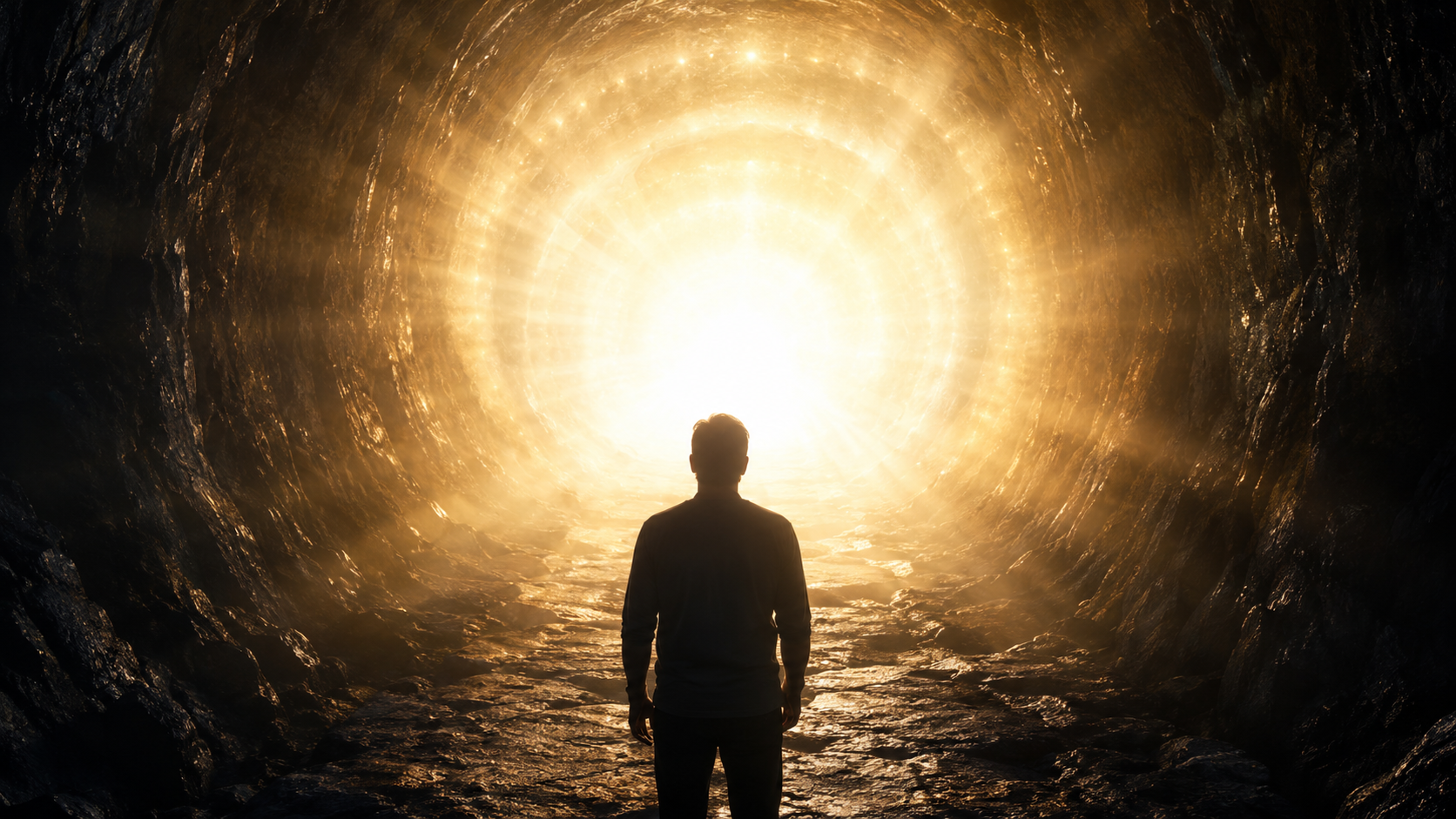
In many accounts, however, attention begins to shift away from the physical environment altogether. The hospital room, accident scene, or other earthly surroundings disappear, and the experiencer finds themselves surrounded by darkness, emptiness, or an apparently infinite space with no recognizable physical reference points. Some remain there briefly and others describe a much longer experience, but the description appears often enough to constitute another major element in the NDE data.
Experiencers use different words for this place or state, just as humans have used different words for the soul. The simplest and most common description is the one I will use here: the void.
Future Science Prediction
Consider this: Humans observed lightning strikes for hundreds of thousands of years before anyone understood anything about electricity. Now, we have developed our understanding to a point where we have solar panels, nuclear reactors on submarines, massive hydroelectric dams, and electricity in practically every home. Our cell phones are powered by miniature lithium ion batteries with enough energy to keep them working for long periods of time. Basically, electricity is now humanity’s bitch.
I feel strongly that eventually humanity will develop technologies in the future to better understand and control all of the things we currently do not understand at all. Gravity, for example. We know what it is. We know what causes it. We can measure its effect (as in how much something weighs). But we cannot control it. Show me a device that can turn off gravity, and I’ll show you the elusive Jetson’s flying car. Eventually that will happen. Maybe not in my lifetime, but sooner or later it’s inevitable.
The same thing goes for the soul. We currently do not have any sort of medical device that can see, detect, or measure the presence or existence of a human soul. Or any soul for that matter. Meaning – the souls of animals, plants, insects, or any other living creature. I feel strongly we will eventually come to a point in our understanding of these issues where we have developed the technology to see, measure, and test for the presence of the soul. It’s only a matter of time.
Thoughts, Feedback, and Impressions
I firmly respect the intelligence of everyone reading these words. I believe inspiration can come from anyone or anywhere. You might not agree with my conclusions, and my goal is never to change that way anyone thinks about these issues, especially if you are already operating under a strong faith-based belief system. I report what the NDE data reveals through analysis. With all of that having been said, I ask for your thoughts, feedback, comments, and impressions. What am I missing? Do you agree? Has it happened to you? Let me know.
Want to go deeper? Don Winner brings decades of intelligence and investigative experience to the biggest question there is: what happens when we die.
In You’re Going to Die Someday, Right? Near-Death Experiences Reveal What Happens Next, he examines the evidence from thousands of near-death experiences to find out what they actually tell us about consciousness, the soul, God, and the afterlife.
In Hell Exists, But Only for the Living, he investigates where our idea of hell came from and who built it, tracing the doctrine back to its human sources.
Get your copy of You’re Going to Die Someday, Right? or Hell Exists, But Only for the Living.