
I recently posted a short video clip taken from a podcast about Out of Body Experiences on several social media channels. Someone responded with a comment saying something to the effect of “in the first 30 seconds I saw enough BS to fertilize my entire garden.”

Fair enough. Skepticism is a reasonable starting position — I hold it myself. I’ve never had an NDE. I approach this research the same way I approached intelligence work for decades: follow the evidence, control for bias, and don’t conclude more than the data supports.
But here’s the thing about Out of Body Experiences specifically: the evidence is unusually hard to dismiss.
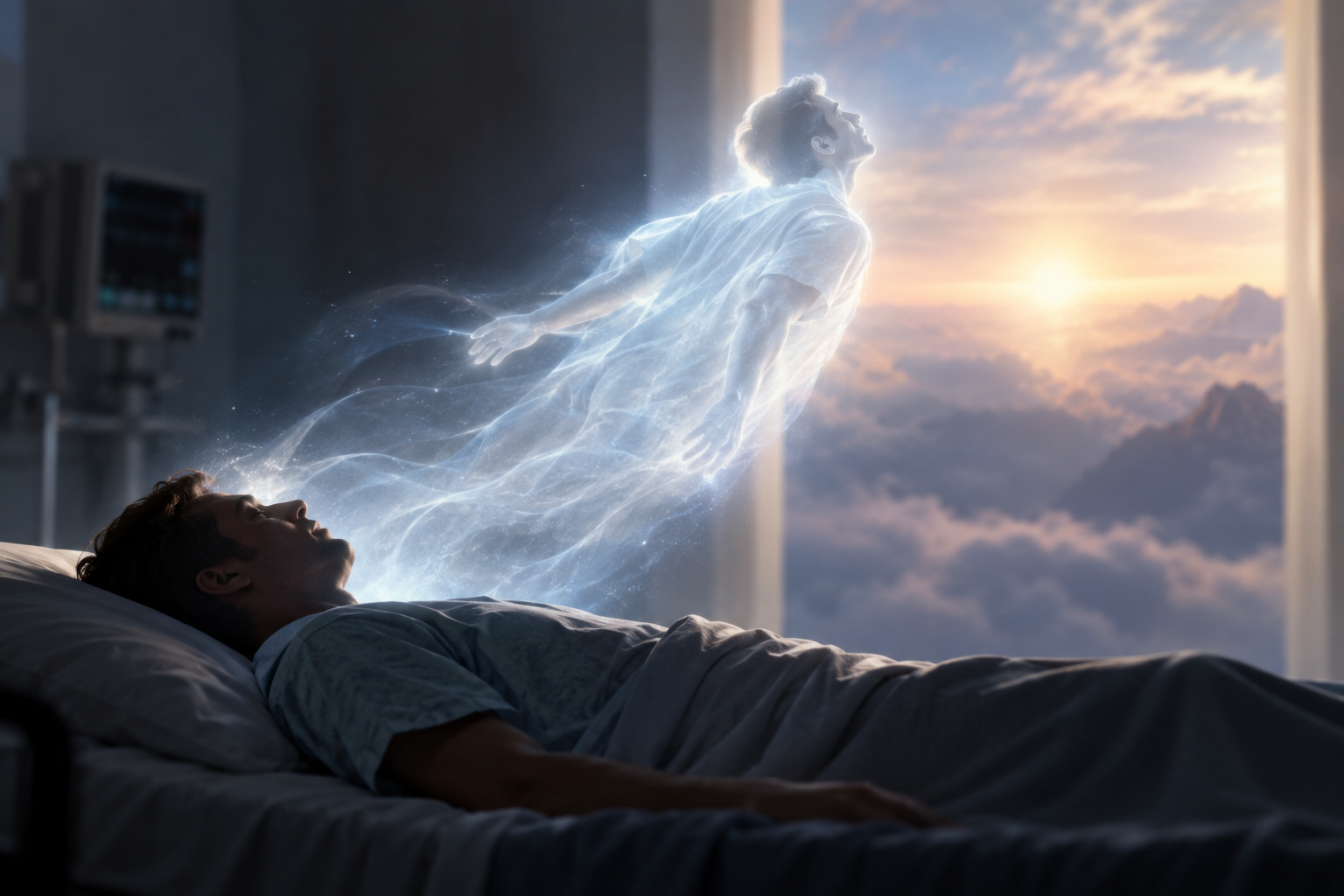
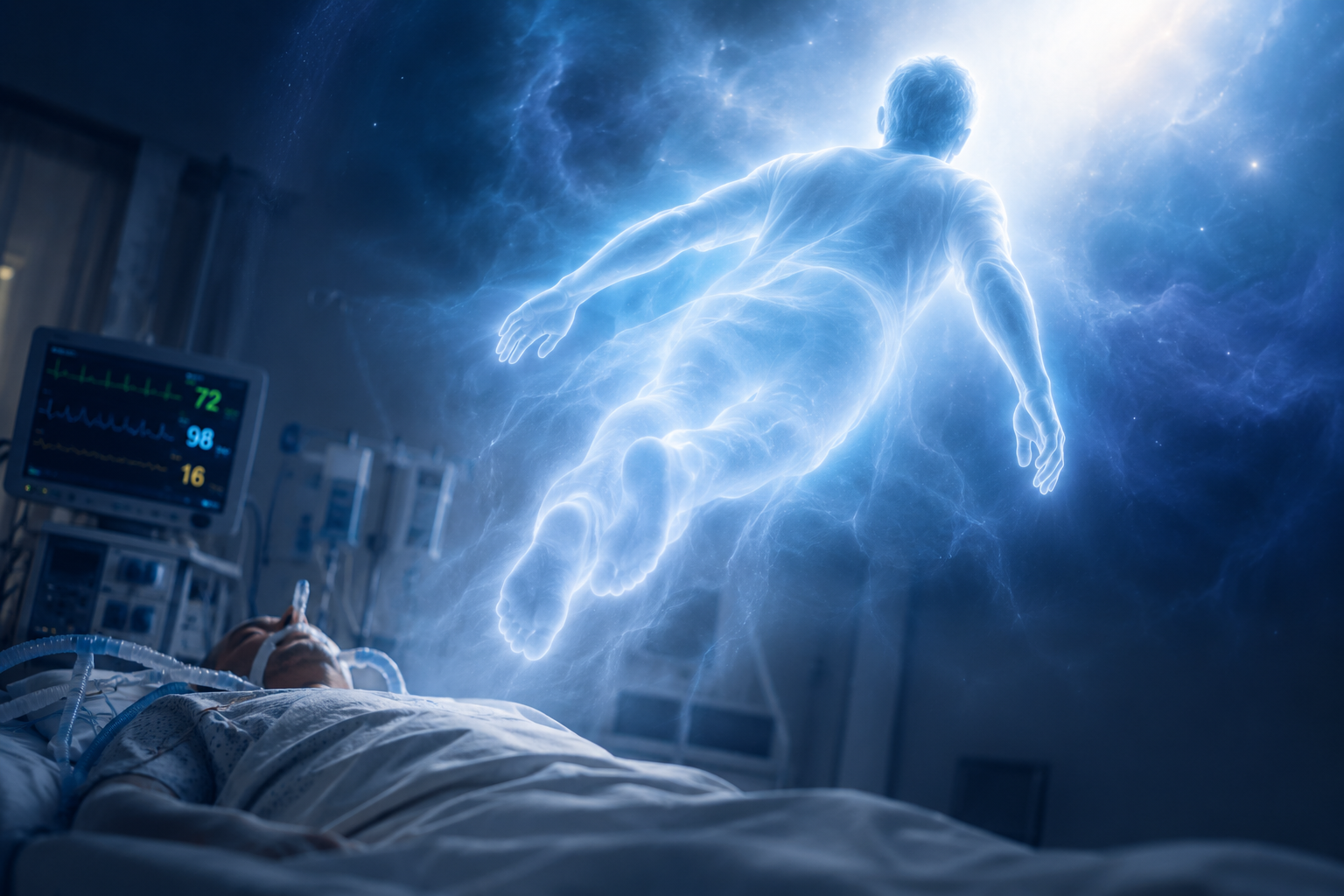
OBEs occupy a chapter of their own in my book — twenty pages in Chapter 8 — because they represent the most falsifiable element of the entire NDE phenomenon. Unlike the tunnel, the light, or the encounter with deceased relatives, OBEs generate verifiable claims. The experiencer was unconscious, clinically dead, eyes taped shut — and yet they come back describing specific details of the room, specific conversations, specific objects in specific locations that were later confirmed by witnesses and medical staff who were present.
That’s not a spiritual argument. That’s an evidentiary one.
The pattern keeps repeating across decades of research, across multiple countries, across patients who had every reason to have no conscious experience at all. A neurosurgeon’s private surgical habit. A tennis shoe on a hospital ledge three floors up. A woman blind since birth describing her own wedding ring. A cardiac patient directing a nurse to the exact drawer where his dentures were placed while he was clinically dead.
In NDE research, the term veridical refers to an experience that can be independently verified as accurate — perception that corresponds to objective, confirmable reality. When a cardiac arrest patient describes the specific instrument a surgeon used, the exact words spoken in an adjacent room, or an object in a location physically impossible to see from any normal vantage point, and that description is later confirmed by witnesses who were present, the perception is called veridical. The word itself comes from the Latin veridicus — truth-telling. In the context of NDEs, it carries significant scientific weight because it shifts the conversation from subjective testimony to something that can actually be checked.
The reason veridical perception matters so much is that it directly challenges the dominant explanation for NDEs — that they are hallucinations, dreams, or neurochemical artifacts of a dying brain. A hallucinating brain generates internal content. It does not accurately report external, independently confirmable facts that the patient had no physical means of perceiving. When a woman blind since birth correctly describes her own wedding ring, when a patient identifies a shoe on a third-floor ledge visible only from outside the building, when a man under full anesthesia with his eyes taped shut describes his surgeon’s private arm-flapping habit and the surgeon confirms it — those aren’t hallucinations behaving badly. Those are data points that the hallucination hypothesis has to account for and, so far, largely cannot. Veridical NDE perceptions don’t prove consciousness survives death. What they do is establish, with reasonable evidentiary rigor, that something was perceiving during a period when perception should have been neurologically impossible.
What follows is a curated list of the ten most famous, most widely documented, and most rigorously verified OBE cases in the NDE research literature — with sources, references, and links. Some of these cases have been published in peer-reviewed journals including The Lancet and Resuscitation. Some have been investigated by cardiologists, neurosurgeons, and research teams at major universities.
You don’t have to believe any of it. But you do have to explain it.
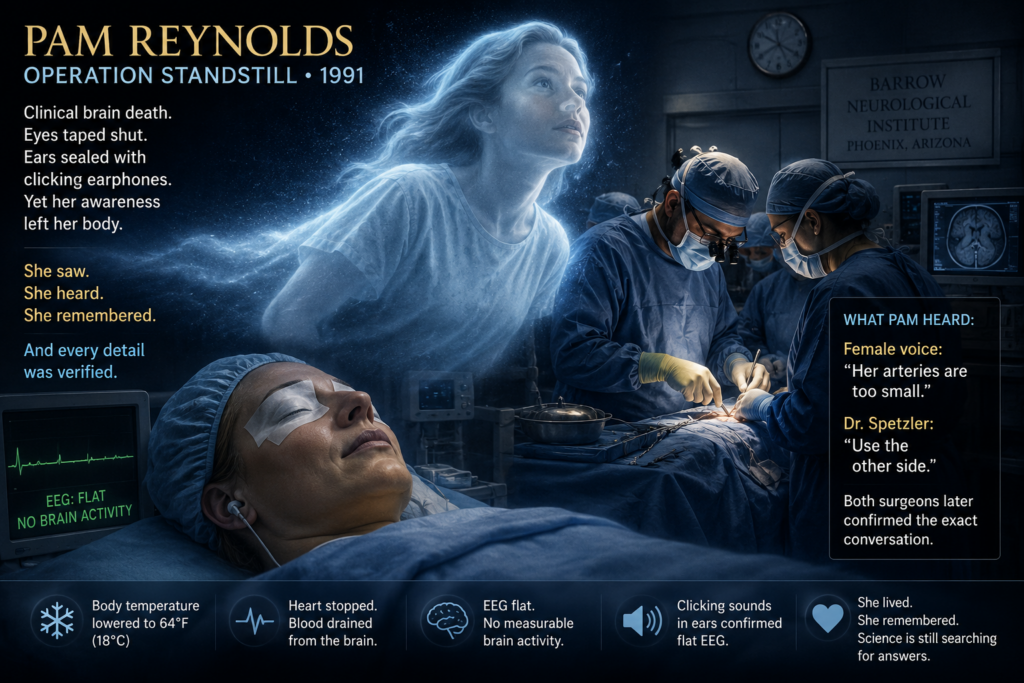
1. Pam Reynolds — “Operation Standstill” (1991)
The gold standard of verified OBE research. Reynolds underwent surgery for a giant basilar artery aneurysm under the care of neurosurgeon Robert Spetzler at the Barrow Neurological Institute in Phoenix. The procedure required that her body temperature be lowered to a level so extreme she was essentially dead. Her brain would not function, but it would be able to survive longer without oxygen at this temperature. Her eyes were closed with tape and small earplugs with speakers were placed in her ears emitting audible clicks to confirm a flat EEG — indicating a non-responsive brain. SalonWikipedia
Wow factor: Despite eyes taped shut and clinical brain death confirmed, Reynolds reported hearing the surgical bone saw and described it as looking like an electric toothbrush — accurate. She then heard a conversation between her male neurosurgeon and a female cardiac surgeon. The female voice said, “Her arteries are too small.” The neurosurgeon replied, “Use the other side.” Later, both doctors confirmed this exchange, explaining that they needed to find a viable femoral artery, which turned out to be on the side opposite the first attempt. Spetzler himself stated: “From a scientific perspective, I have absolutely no explanation about how it could have happened.” Pocahontas TimesNPR
Sources:
- Sabom, M. (1998). Light and Death. Zondervan. (Primary case documentation)
- Psi Encyclopedia case study: https://psi-encyclopedia.spr.ac.uk/articles/pam-reynolds-near-death-experience/
- Salon.com deep analysis: https://www.salon.com/2012/04/21/near_death_explained/
- BBC Documentary: The Day I Died (2002)
- NPR coverage: https://www.npr.org/2009/05/22/104397005/decoding-the-mystery-of-near-death-experiences
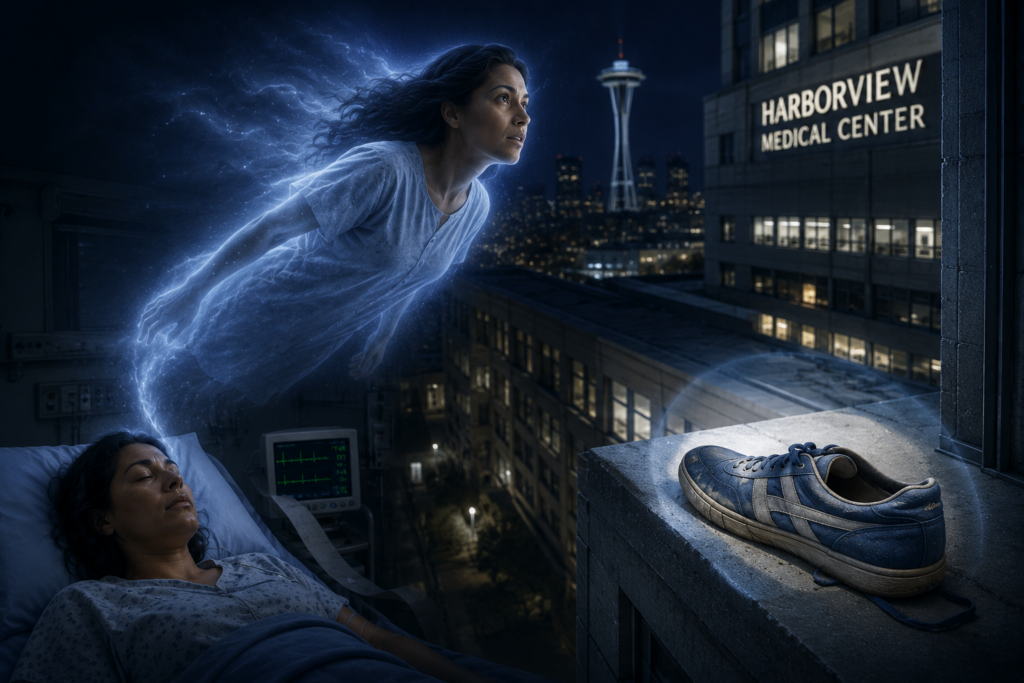
2. Maria’s Tennis Shoe — Harborview Medical Center, Seattle (1977)
Called by researcher Kenneth Ring “a strange and strangely beguiling sighting of the sort that has the power to arrest the skeptic’s argument in mid-sentence, if only by virtue of its indisputable improbability.” Internet Infidels
Maria, a migrant worker, suffered cardiac arrest at Harborview Hospital. After resuscitation, she told social worker Kimberly Clark Sharp that she had floated out of her body and traveled outside the building. She found herself outside the hospital and spotted a single tennis shoe sitting on the ledge of the north side of the third floor of the building. Maria was not only able to indicate the whereabouts of this oddly situated object, but was able to provide precise details concerning its appearance — such as that its little toe was worn and one of its laces was caught under the heel. ResearchGate
Wow factor: Kimberly Clark went up to the window to verify Maria’s story and, to her amazement, found the blue tennis shoe just as Maria had described. The shoe could only have been seen from a helicopter’s view of the hospital. Clark noted she could not see the worn toe or the tucked-in lace from inside the room — she had to reach out the window to retrieve it. Sharp also noted that Maria described all of the paper on the floor — paper flowing out of the electrocardiogram machine onto the floor and kicked under the bed. “No one ever educates a cardiac patient to that level of detail.” Smart FaithUNT Digital Library
Sources:
- Sharp, K.C. (2007). “The Other Shoe Drops.” Journal of Near-Death Studies, 25(4): https://digital.library.unt.edu/ark:/67531/metadc798924/m2/1/high_res_d/vol25-no4-245.pdf
- Ring, K. & Lawrence, M. (1993). “Further Evidence for Veridical Perception During Near-Death Experiences.” Journal of Near-Death Studies: https://www.researchgate.net/publication/226754118
- Patheos case summary: https://www.patheos.com/blogs/danpeterson/2019/07/the-shoe-on-the-ledge.html
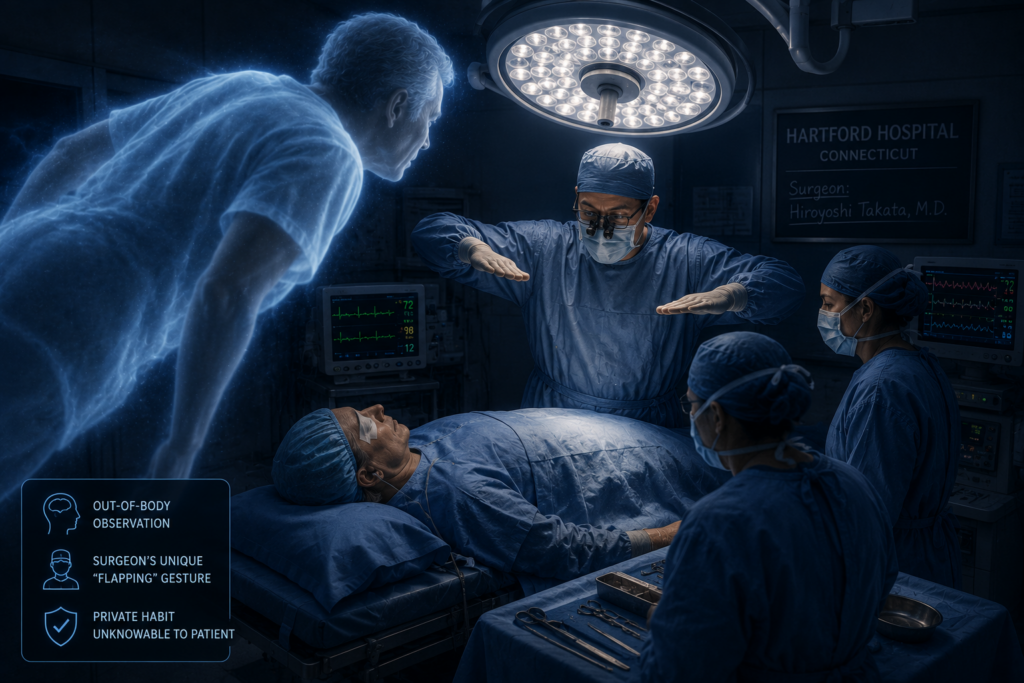
3. Al Sullivan — The Flapping Surgeon, Hartford Hospital (early 1990s)
Al Sullivan, a 56-year-old van driver, underwent an emergency operation for heart arrhythmias at Hartford Hospital in Connecticut. A coronary artery became blocked, requiring immediate surgery. During an out-of-body experience, he observed his body lying on a table and covered by sheets, an incision exposing his chest cavity. He also saw the surgeon, Hiroyoshi Takata, looking perplexed, and it seemed to him that Takata was flapping his arms, as if trying to fly. Psi Encyclopedia
Wow factor: Sullivan’s cardiologist Anthony LaSala was familiar with Takata’s idiosyncratic habit — holding his hands flat against his chest to avoid contaminating them, while indicating to his assistants with his elbows — which gave the appearance of flapping. Sullivan was fully anesthetized, eyes taped shut, heart open on the table. The chief surgeon confirmed that this behavior is unusual and unlike anything he had seen anyone else do in over 50 years of practice. There is no way Sullivan could have known about this private surgical habit. Psi EncyclopediaRecall
Sources:
- Rivas, T., Dirven, A., & Smit, R. (2016). The Self Does Not Die: Verified Paranormal Phenomena From Near-Death Experiences. IANDS Publications.
- Psi Encyclopedia: https://psi-encyclopedia.spr.ac.uk/articles/near-death-experiences-paranormal-aspects/
- Dr. Bruce Greyson, University of Virginia lecture (Tim Ferriss channel): https://www.recall.it/summary/tim-ferriss/learnings-from-1000-near-death-experiences-dr-bruce-greyson-university-of-virginia
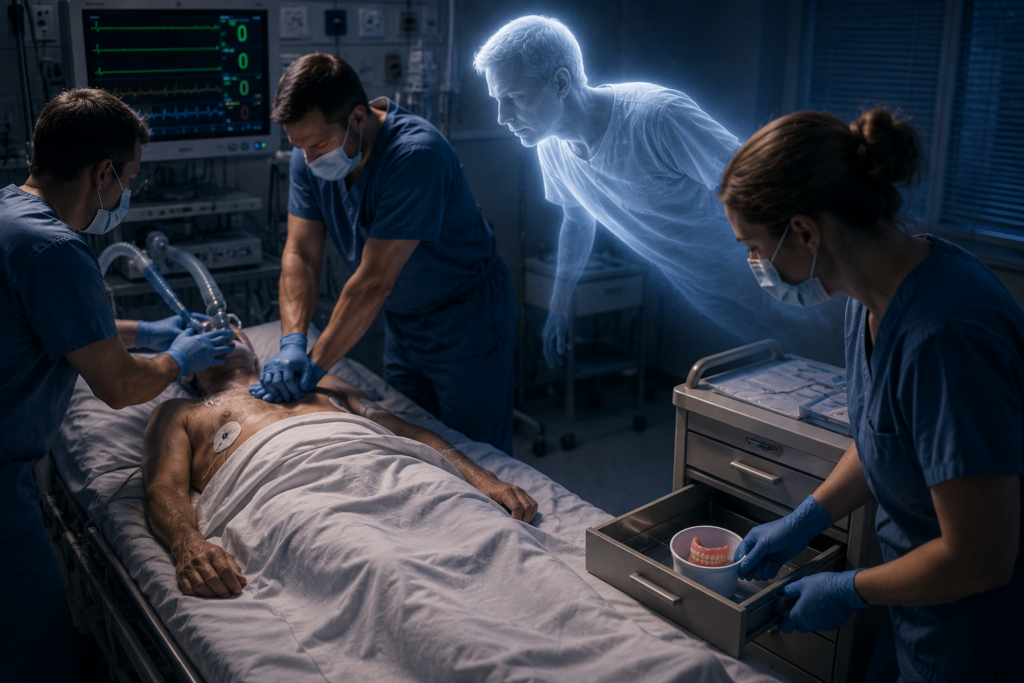
4. The Dutch Dentures Case — Pim van Lommel’s Lancet Study (2001)
The first English-language mention of this case was published in the landmark article by Dutch cardiologist Pim van Lommel in the international medical journal The Lancet (2001). A 44-year-old cyanotic, comatose man was brought into a coronary care unit after being found in a meadow. He had no heartbeat and no brain activity. Neardth
Wow factor: During resuscitation, a nurse removed the man’s dentures and placed them in a specific drawer. One week later, when the same nurse came on shift, the patient — who had never regained consciousness during the procedure — immediately recognized her and said, “Yes! You know where my dentures are! You took them out of my mouth and put them in that drawer over there in that cart.” Van Lommel stated that because of this verifiable OBE, “we know that the NDE must happen during the period of unconsciousness, and not” at any other time when brain function might partially exist. NDERF
Sources:
- Van Lommel, P. et al. (2001). “Near-death experience in survivors of cardiac arrest: a prospective study in the Netherlands.” The Lancet, 358: 2039–2045. https://www.thelancet.com/journals/lancet/article/PIIS0140673601071008/fulltext
- Full case analysis: https://neardth.com/denture-man.php
- Van Lommel’s response to Shermer: https://www.nderf.org/NDERF/Research/vonlommel_skeptic_response.htm
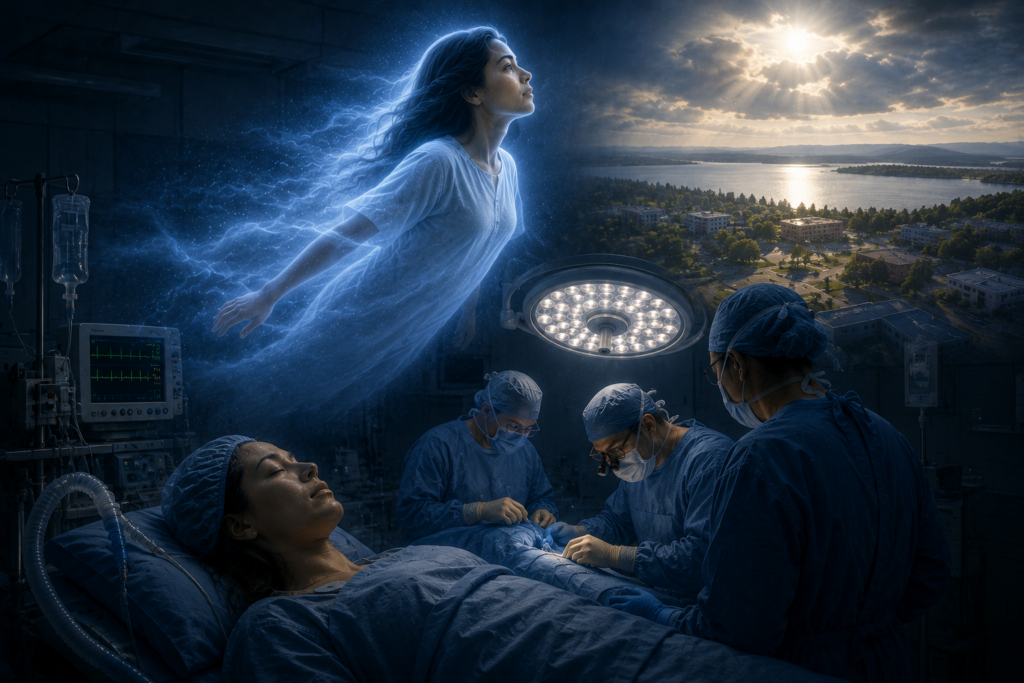
5. Vicki Umipeg (Noratuk) — The Blind Woman Who Saw (1973)
Ring and Cooper consider Vicki to be one of the most compelling and verifiable cases of the congenitally blind ever recorded. Vicki was born blind due to severe and irreversible optic nerve damage. Asked in an interview if she has ever been able to see, she replied, “Nothing, never. No light, no shadows, no nothing, ever. I’ve never been able to understand even the concept of light.” NDERF
At age 22, she was thrown from a car in Seattle, suffering skull fractures. During the NDE she found herself floating above the operating table. She recognized her hair, and then the distinctive wedding ring she was wearing — with orange blossoms on the corners — which she had never seen before. “This was,” she said, “the only time I could ever relate to seeing and to what light was, because I experienced it.” Kenringblog
Wow factor: Her surgical team verified her accurate description of the wedding ring and her account of the hospital grounds. Dr. Jeffrey Long noted she had a 360-degree vision during the NDE: “She could simultaneously be aware of and process vision in front of her, behind her, right, left, up, down.” Vicki literally laughed at Long when he explained that sighted people have limited visual fields — her entire life experience with vision was spherical. Blind people’s dreams contain zero visual imagery — yet her NDE did. Rosicruciansinportlandoregonwilsonville
Sources:
- Ring, K. & Cooper, S. (1999). Mindsight: Near-Death and Out-of-Body Experiences in the Blind. William James Center for Consciousness Studies.
- Full NDE account: https://ndestories.org/vicki-noratuk/
- Kenneth Ring’s memorial blog: https://www.kenringblog.com/2022/11/remembering-two-exceptional-near-death.html
- NDERF analysis: https://www.nderf.org/NDERF/Articles/barbara_blind.htm
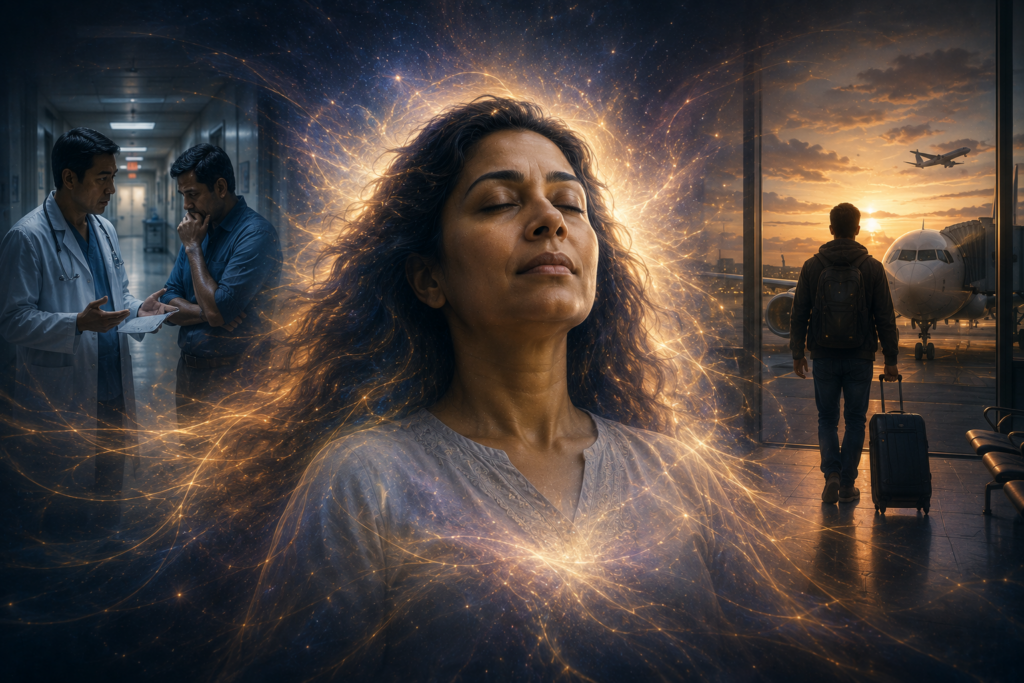
6. Anita Moorjani — Cancer Vanishes After NDE (2006)
After being diagnosed with stage 2A Hodgkin’s lymphoma in 2002 and rejecting conventional treatment, Moorjani was taken to a hospital in Hong Kong in 2006 where she lay in a coma for 30 hours. Her attending oncologist told her husband it was “too late.” Her tumors had grown to the size of lemons throughout her lymphatic system, from the base of her skull to below her abdomen. Her brain was filled with fluid, as were her lungs. WikipediaAnita Moorjani
Wow factor: During the coma she reported hearing conversations happening outside her room — including a physician telling her husband in the corridor that her organs were failing. She also reported seeing her brother boarding a plane in another country to come say goodbye. She told family members about it later, and they confirmed she could not have heard certain things because they weren’t in her room at the time. Her tumors shrank by about 70% within four days of waking. Within five weeks she was cancer-free. An American oncologist who flew to Hong Kong to study her records stated he had never seen a case this severe turn around so quickly. South China Morning PostWikipedia
Sources:
- Moorjani, A. (2012). Dying to Be Me. Hay House.
- Moorjani’s own account: https://www.anitamoorjani.com/my-nde
- Wikipedia overview: https://en.wikipedia.org/wiki/Anita_Moorjani
- Oncologist commentary: https://www.thenationalnews.com/arts-culture/books/the-startling-near-death-experience-of-author-anita-moorjani-1.590676
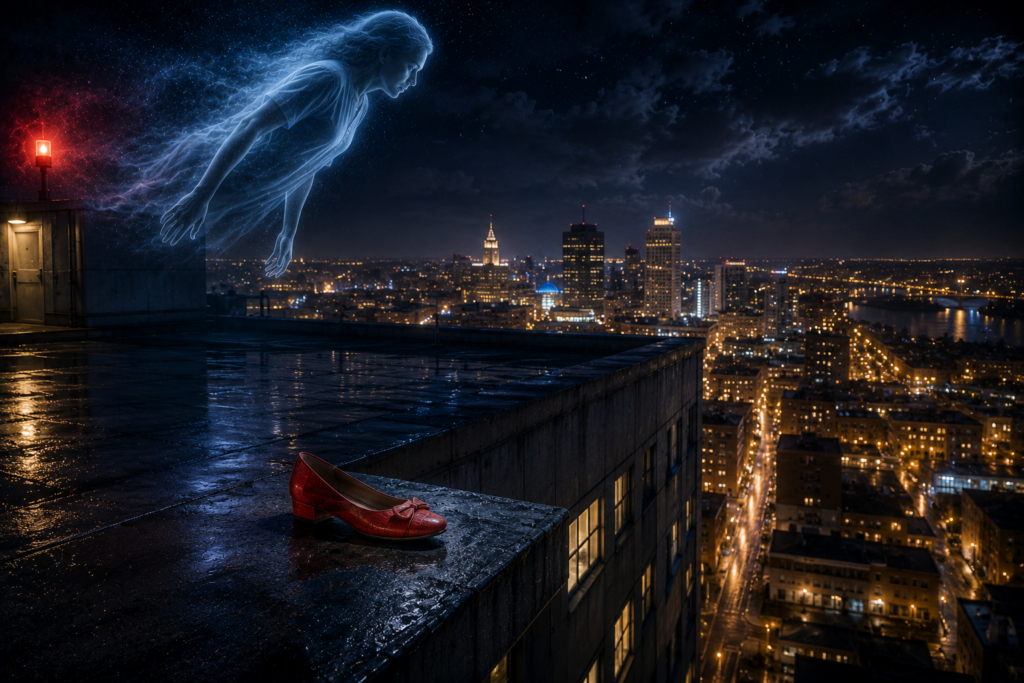
7. The Hartford Hospital Red Shoe Case (1985)
A separate shoe case — different hospital, different city, different nurse — reported independently of Maria’s case. The resuscitated patient claimed to have had an NDE in which she floated above her body and then watched the resuscitation attempt going on beneath her. Then she experienced being “pulled” through several floors of the hospital until she emerged near the building’s roof, where she viewed the Hartford skyline. Looking down, she then observed a red shoe. When nurse Kathy Milne heard the story, she reported it to a resident physician, who mocked the account as a ridiculous tale. However, in order to ascertain the accuracy of the report, he enlisted a janitor’s assistance, and was led onto the roof, where he found the red shoe. Mind Matters
Wow factor: The nurse involved was unfamiliar with the Seattle tennis shoe case, which had been published just shortly before. Two independent shoe cases at two different hospitals in two different cities, reported by two different patients, verified by two different hospital staff members.
Sources:
- Ring, K. & Lawrence, M. (1993). Journal of Near-Death Studies.
- MindMatters.ai analysis: https://mindmatters.ai/2024/02/prof-theres-a-growing-number-of-verified-near-death-experiences/
- Cross-referenced in Rivas et al. (2016). The Self Does Not Die.
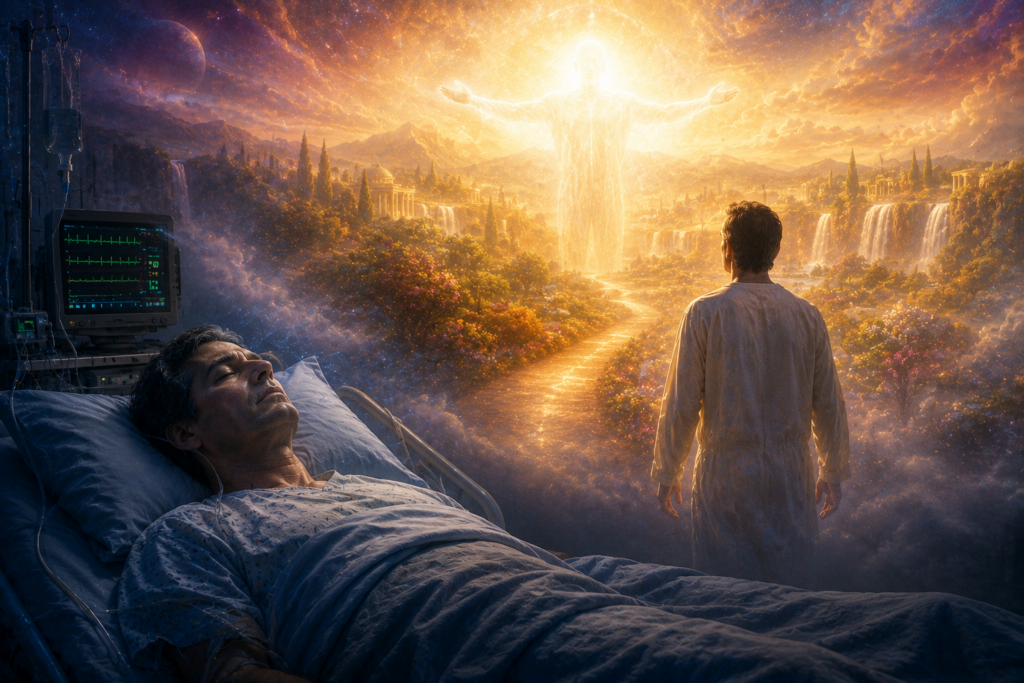
8. Eben Alexander — Neurosurgeon’s NDE During Bacterial Meningitis (2008)
Alexander experienced a profound NDE during a coma induced by bacterial meningitis. He reported visiting a beautiful, heavenly realm, encountering a divine being he identified as God, and receiving messages of love and interconnectedness. Earth.com
Wow factor: Alexander was a practicing academic neurosurgeon and lifelong skeptic of NDEs. His case is notable because bacterial meningitis caused his entire neocortex — the part of the brain responsible for consciousness, thought, language, and memory — to be completely shut down and inflamed for seven days. By the standard materialist model of consciousness, he should have had no experience whatsoever. His detailed and coherent memories of the experience, reported after the neocortex recovered, remain scientifically difficult to explain. His attending physicians confirmed the severity of his condition and the total functional shutdown.
Sources:
- Alexander, E. (2012). Proof of Heaven: A Neurosurgeon’s Journey into the Afterlife. Simon & Schuster.
- Alexander’s website: https://ebenalexander.com
- Reviewed in the NIH/PMC NDE evidence article: https://pmc.ncbi.nlm.nih.gov/articles/PMC6172100/
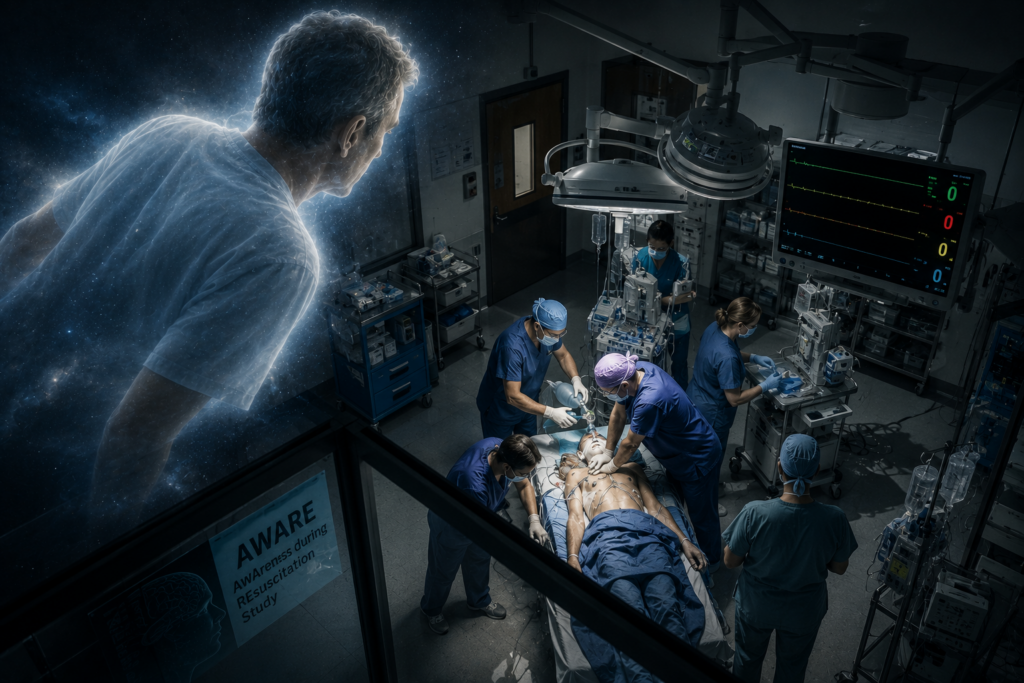
9. The AWARE Study — Patient 10, Southampton (2014)
In 2008, a large-scale study involving 2,060 patients from 15 hospitals in the UK, US, and Austria was launched. The AWARE (AWAreness during REsuscitation) study examined the broad range of mental experiences in relation to death. Researchers also tested the validity of conscious experiences using objective markers for the first time in a large study, to determine whether claims of awareness compatible with out-of-body experiences correspond with real or hallucinatory events. University of Southampton
Wow factor: One verified case emerged. One patient described events that could be verified. The two NDEs occurred in an area where “no visual targets had been placed.” This patient — a 57-year-old male cardiac arrest survivor — accurately described the sequence of events, the appearance of staff, and specific procedures during his resuscitation for a full three-minute period while he had no detectable heartbeat or brain activity. He described a nurse and her actions with enough precision to be corroborated by staff. Lead researcher Dr. Sam Parnia stated this was the first case in the study to be objectively verified. Wikipedia
Sources:
- Parnia, S. et al. (2014). “AWARE — AWAreness during REsuscitation — A Prospective Study.” Resuscitation, 85(12): 1799–1805.
- University of Southampton press release: https://www.southampton.ac.uk/news/2014/10/07-worlds-largest-near-death-experiences-study.page
- Wikipedia OBE overview: https://en.wikipedia.org/wiki/Out-of-body_experience
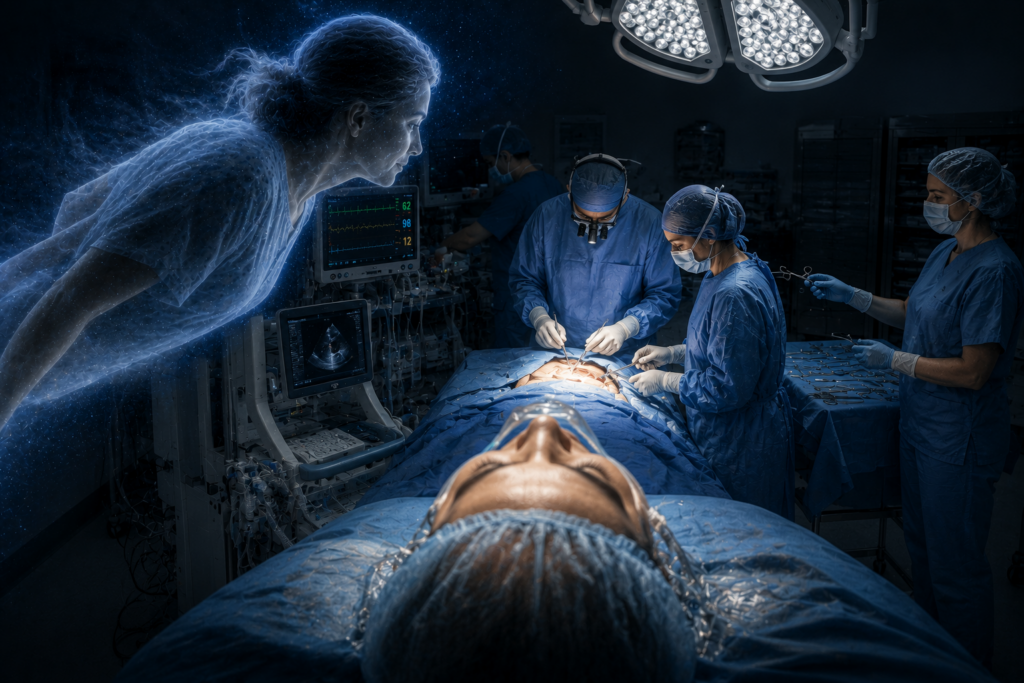
10. The JS Case — Mario Beauregard’s Verified Cardiac Surgery OBE
Documented by neuroscientist Dr. Mario Beauregard and his research team as part of systematic NDE research. During her operation, the patient JS observed the equipment for anesthesia and ultrasound that were located behind her head and obscured from her view from her position on the operating table. She also observed a nurse handing over medical instruments to the surgeon. Beauregard’s team verified the descriptions that JS gave of the nurse and the equipment, which were confirmed as correct by the surgeon. Psi Encyclopedia
Wow factor: The equipment she described was physically behind her head and impossible to see from any normal vantage point — or from any position on the table. The verification came from the surgeon directly, not from the patient’s own reconstruction. It represents a clean, small-scale, independently corroborated case with a tight evidentiary chain.
Sources:
- Beauregard, M. et al. (2012). “Conscious Mental Activity during a Deep Hypothermic Cardiocirculatory Arrest?” Resuscitation, 83(1): e19.
- Reviewed in Psi Encyclopedia: https://psi-encyclopedia.spr.ac.uk/articles/near-death-experiences-paranormal-aspects/
- Rivas, T. et al. (2016). The Self Does Not Die. IANDS Publications. Available: https://iands.org/research/publications/iands-publications/the-self-does-not-die.html
Master reference for the field:
- Rivas, T., Dirven, A., & Smit, R. (2016). The Self Does Not Die: Verified Paranormal Phenomena from Near-Death Experiences. IANDS Publications — the most comprehensive scholarly compilation of corroborated OBE/NDE cases.
- NIH/PMC review article (free access): https://pmc.ncbi.nlm.nih.gov/articles/PMC6172100/
- NDERF (Near Death Experience Research Foundation — Dr. Jeffrey Long): https://www.nderf.org
So. Still think it’s fertilizer?
The skeptic who left that comment wasn’t wrong to demand evidence. That’s exactly the right instinct. What the cases above demonstrate is that the evidence exists — published in The Lancet, verified by surgeons, confirmed by nurses who were in the room, documented by research teams at major universities. These aren’t ghost stories passed around a campfire. They are peer-reviewed, independently corroborated, multiply-witnessed accounts of perception occurring during periods when perception should have been neurologically impossible.
You are, of course, free to dismiss all of it. But at some point the garden gets pretty well fertilized, and you still have to explain the shoe on the ledge.

Want to go deeper? Don Winner brings decades of intelligence and investigative experience to the biggest question there is: what happens when we die.
In You’re Going to Die Someday, Right? Near-Death Experiences Reveal What Happens Next, he examines the evidence from thousands of near-death experiences to find out what they actually tell us about consciousness, the soul, God, and the afterlife.
In Hell Exists, But Only for the Living, he investigates where our idea of hell came from and who built it, tracing the doctrine back to its human sources.
Get your copy of You’re Going to Die Someday, Right? or Hell Exists, But Only for the Living.