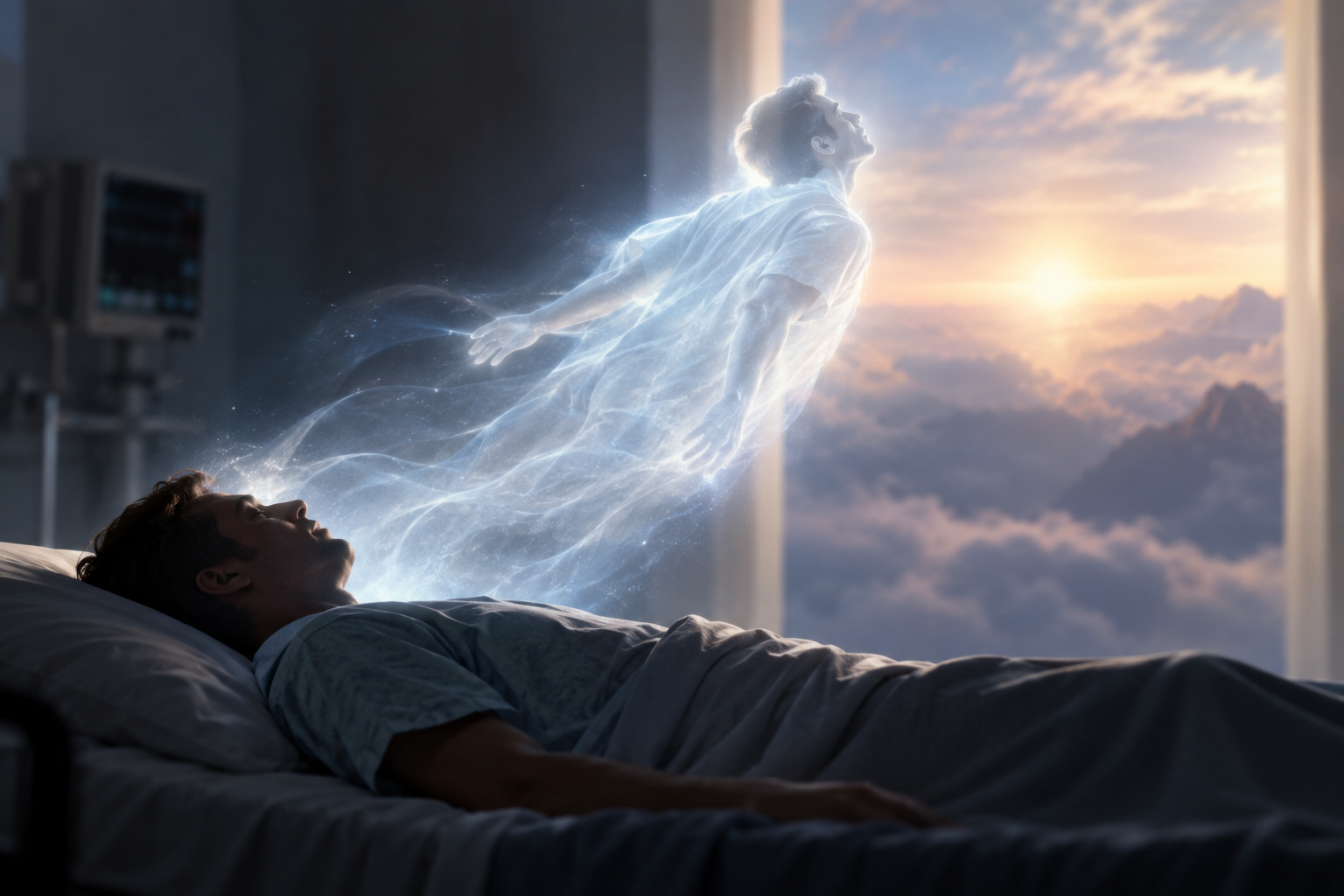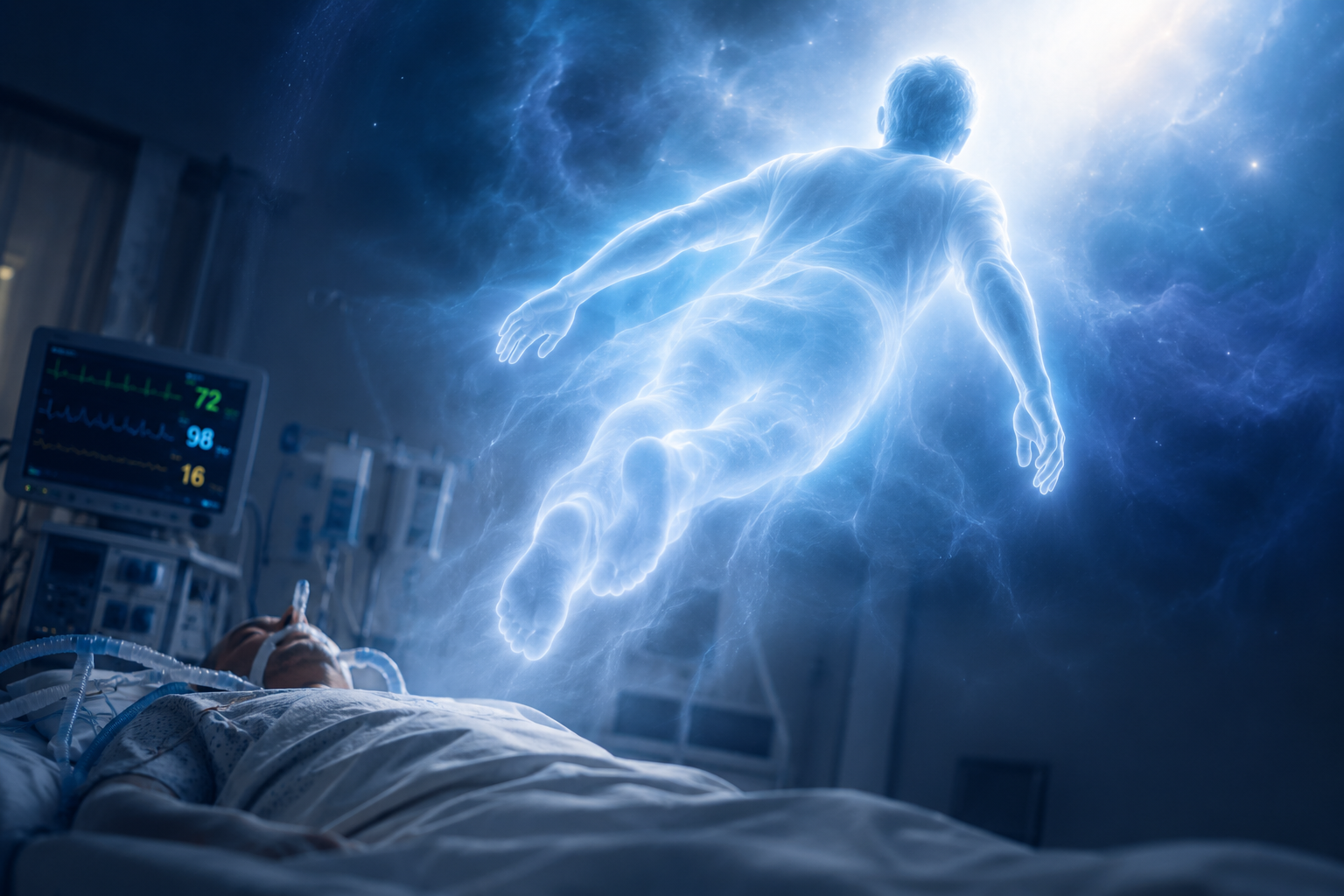

A skeptic can tell a compelling story about a brain under siege. Oxygen drops. Drugs are administered. Memory becomes unstable. Fear generates vivid scenes. Those facts are real, and they can explain a great deal about human experience under medical catastrophe. But can skeptics explain NDEs fully? No. Their theories explain some events that are wrongly placed in the NDE file, then pretend that the entire case is closed.
That is not an investigation. It is a category error.
An authentic near-death experience is not simply any unusual memory from an operating room, intensive care unit, overdose, or coma. An NDE occurs during genuine clinical death. It is typically peaceful, coherent, and capable of containing information the experiencer should not have been able to obtain through ordinary senses. The strongest cases include verified veridical perception: accurate observations later corroborated by witnesses, records, or physical facts beyond the patient’s normal reach.
That is the evidence skeptics still have not neutralized.
Can Skeptics Explain NDEs Fully? Start With Definitions
The first skeptical maneuver is to place every extraordinary report into one big box called “a brain event.” That box contains anesthesia awareness, hallucinations, delirium, trauma memories, medication effects, sleep-related experiences, and genuine NDEs. Once the distinctions are erased, the conclusion is easy: brains can generate strange experiences, therefore every strange experience comes from a brain.
That is not how serious analysis works. A field investigator separates events before assigning causes.
Winner NDE uses three names because the evidence demands three categories. An NDE is an authentic experience occurring during verified death. A Fear Coma Experience, or FCE, is the terrifying hellscape imagery generated in a living brain under catastrophe. A Welded NDE is the rare circumstance in which a person undergoes both an FCE and an authentic NDE, then carries the memories together because there was no clock inside the event to separate them.
This distinction matters most for accounts once mislabeled “distressing NDEs.” The old label confused readers and handed skeptics an easy talking point. A person may report terror, confinement, demons, punishment, grotesque landscapes, or endless dread while medically alive in a coma, delirium, or traumatic crisis. The witness may be entirely honest. The experience may permanently change that person’s life. But terror imagery from a living brain is not evidence about the afterlife. It is an FCE.
Hell is real in this limited and frightening sense: it can be experienced by the living human brain under catastrophe. It does not follow that hell awaits the dead. And it does not explain an authentic NDE occurring after clinical death.
The Explanations That Work – Until They Do Not
Skeptics usually offer a familiar set of mechanisms: oxygen deprivation, excess carbon dioxide, medication, temporal-lobe disturbance, expectation, memory reconstruction, and the psychological need for meaning. Each mechanism can be relevant to some reports. None carries the weight skeptics place on it.
Take oxygen deprivation. It can produce confusion, agitation, tunnel vision, distorted perception, and fragmented recall. That makes it a plausible candidate for an FCE or for chaotic medical memories. Yet an authentic NDE is often remembered as unusually lucid, organized, and more real than ordinary waking life. The skeptic must explain not merely vividness, but sustained clarity and coherent perception at the very point ordinary cognition should be failing.
Drugs have the same problem. Sedatives and anesthetics can create bizarre dreams, false memories, and sensory distortion. They can also leave people disoriented. But drug effects are not a universal explanation for NDEs, because many reports occur under differing medical conditions, with different medications or no relevant medication at all. A theory that explains only selected cases is not a full explanation.
Expectation is even weaker. People do not enter a crisis with a standardized script and emerge with one. NDEs vary in imagery and personal language across cultures. Yet recurring structural features remain striking: separation from the body, heightened awareness, encounters, movement beyond ordinary space, profound peace, and a return that is often reluctant. The pattern is not proof by itself, but it is evidence that must be accounted for rather than waved away.
Memory reconstruction is a useful caution, not a universal solvent. Of course memories can change. Of course frightened people can fill gaps. That is exactly why strong NDE research gives special weight to details documented early and independently corroborated later. When a patient reports a specific event, conversation, object, action, or circumstance outside normal sensory access, and the detail checks out, “memory is unreliable” no longer answers the question. It merely restates a general truth while avoiding the particular evidence.
Verified Perception Is the Skeptic’s Hard Problem
The load-bearing issue is not whether the brain can create imagery. It plainly can. The hard problem is whether a brain that is not functioning normally can acquire accurate information unavailable to its body.
This is where skeptical explanations become noticeably elastic. If a verified detail is reported, the skeptic may suggest lucky guessing, unconscious sensory pickup, information leakage from medical staff, or later confabulation. Those possibilities should be tested. They should not be assumed simply because the alternative is uncomfortable.
A disciplined review asks practical questions. Was the reported fact specific? Was it documented before the patient could have learned it normally? Who corroborated it? Could sound, sight, staff comments, or later conversations reasonably account for it? Is the account internally stable? Does the timing fit the medical record?
Weak cases should be set aside. Inflated stories should be challenged. That does not weaken the NDE case. It strengthens it by refusing to build a major conclusion on anecdotes that cannot bear the load.
But dismissing every strong case by inventing an unproven ordinary route is not skepticism. It is an evidentiary double standard. The skeptic demands perfect documentation from an emergency situation, then treats any missing camera angle or incomplete chart as permission to ignore the corroborated facts that remain.
The FCE Correction Removes a False Skeptical Victory
For decades, frightening reports were used as if they disproved the peaceful character of NDEs. The argument went like this: if some people see horror and others see peace, then all reports must be subjective fantasy. That conclusion relies on mixing two different phenomena.
An FCE is often chaotic, threatening, bodily, and saturated with fear. It tracks what a living brain can do in extreme distress. An authentic NDE is different in character and conditions. It occurs when the body has been left behind, and its defining evidence is not merely a feeling of transcendence. It is the combination of clinical death, coherence, recurring features, and, in the strongest cases, verified perception.
A Welded NDE can confuse the record because a survivor may remember both experiences as one continuous ordeal. The correct response is not to call the witness dishonest or defective. It is to separate the evidence carefully. Which elements bear the signature of an FCE? Which occurred during verified death? Which details can be checked? That is how an investigator handles a complicated report without reducing it to a slogan.
Don Winner’s book, Hell Exists, But Only for the Living, pursues this correction directly: fear belongs to the catastrophe of the living brain, while the authentic NDE belongs to a different evidentiary category altogether.
What an Honest Skeptic Can Still Say
An honest skeptic can say that not every extraordinary hospital memory is an NDE. Correct. A skeptic can say that some reports are contaminated by drugs, delirium, folklore, fear, or later retelling. Also correct. A skeptic can demand better time-stamped records, independent witnesses, and tighter hospital protocols. That demand is welcome.
What the skeptic cannot honestly say is that the case has been fully explained by brain chemistry. Brain chemistry can account for FCEs and many confusing edge cases. It has not accounted for verified perception during clinical death. It has not accounted for why the clearest accounts repeatedly describe awareness functioning when the bodily conditions for ordinary awareness are absent.
The distinction is not academic. A grieving daughter, a man facing surgery, and an older reader lying awake at 3 a.m. are not asking whether every human memory is flawless. They are asking whether death is annihilation.
The evidence does not ask you to abandon reason. It asks you to use it without fear. Keep the weak cases out. Name Fear Coma Experiences for what they are. Examine verified perception without evasions. Then let the strongest evidence say what it has been saying all along: death may be the end of the body, but it is not the end of the person.
Want to go deeper? Don Winner brings decades of intelligence and investigative experience to the biggest question there is: what happens when we die.
In You’re Going to Die Someday, Right? Near-Death Experiences Reveal What Happens Next, he examines the evidence from thousands of near-death experiences to find out what they actually tell us about consciousness, the soul, God, and the afterlife.
In Hell Exists, But Only for the Living, he investigates where our idea of hell came from and who built it, tracing the doctrine back to its human sources.
Get your copy of You’re Going to Die Someday, Right? or Hell Exists, But Only for the Living.