Donghui Institute — Zhao Yue
Published in: “The Science and Wisdom of Facing Death — Where Do I Go?”
Table of Contents
- Early Hallucination Theory
- From Subjective Near-Death Hallucinations Back to Objective Near-Death Experiences
- Research into the Credibility of Near-Death Experiences:
- Research into the Similarity of NDEs (Rather Than Random Hallucinations)
- Cross-Cultural Research on NDEs
- Chinese NDE Research
- Neuroscience Verification of the Reality of NDEs
- Visual Impairment & NDEs in the Blind — Verifiable NDE Cases
- Visual Verification of Post-Death Consciousness from a State of Clinical Death: “My Dentures Are in That Drawer”
- Knowledge of Post-Death Consciousness from an Unusual Perspective During Clinical Death: Dust on the Surgical Light
- Knowledge of Post-Death Consciousness from the NDEs of the Totally Blind
- NDE Case of a Person Born Totally Blind
- A Congenitally Blind Patient “Saw” the 14 Doctors Who Rescued Her
- Conclusion & Afterword
Having worked in life education for 20 years, I have found that many people who are just beginning to learn about death and the phenomenon of near-death experiences tend to ask the same question: are near-death experiences nothing more than hallucinations triggered by a brain that hasn’t quite died? It is not surprising to have this thought, because near-death experiences are so far beyond ordinary understanding — so surreal. After my own first near-death experience, I strongly questioned whether what I had experienced could possibly have been a hallucination (see: Zhao Yue, Rebirth After Death — A New Perspective). And when I tried to explore this question from an academic perspective after my car accident, I found that many scholars in their early research had also treated the NDE phenomenon as hallucination. However, from the literature review I have compiled below, you should be able to see quite easily how scholars around the world have moved from the initial hallucination theory, gradually abandoned it, and from different angles have continued to confirm the reality and objectivity of near-death experiences.
First, to help friends who are less familiar with near-death experiences, let me describe what a near-death experience (NDE) is. A near-death experience generally refers to visual experiential phenomena that occur during clinical death or when one is very close to death. Here are two fairly formal definitions:
Definition of NDE: A near-death experience is a phenomenon experienced by some people during clinical death or when very close to death. A near-death experience (NDE) refers to personal experiences associated with impending death. — Wikipedia
A near-death experience or terminal visual near-death experience (NDE) refers to the subjective experience at the moment of threatened death as described by people who have suffered serious trauma or illness but unexpectedly recovered, as well as people who sensed imminent death while in a potentially life-destroying situation but fortunately escaped. — Baidu Encyclopedia
1. Early Hallucination Theory
The earliest scholars to study near-death experiences actually described them as hallucinations. See:
1907 — James Hyslop published the paper Visions of the Dying in the United States.
1926 — The famous British physicist William Barrett published Death-Bed Visions, among others.
1970 — Psychiatry professor Russell Noyes and clinical psychologist Roy Kletti proposed the depersonalization model, arguing that near-death experiences are a form of depersonalization experienced under emotional conditions such as life-threatening danger or potentially unavoidable peril, and that NDEs could best be understood as hallucinations.
Please note that in the early period when near-death experiences entered the view of Western scholars, most doctors and researchers treated these interesting and novel near-death phenomena as interesting hallucinations to be studied — just as even now, in the 21st century, many people still think NDEs are mysticism or superstition.
After 1970, the volume of literature grew in many directions, so rather than continuing along a timeline (which would make for poor readability), I will organize by the logic of different research directions.
2. From Subjective Near-Death Hallucinations Back to Objective Near-Death Experiences
After this period, in the literature review I also found numerous models attempting to explain the causes of these supposed hallucinations, such as:
- Psychedelic substances: psilocybin mushrooms, ayahuasca preparations, cannabis, peyote, Colorado River toad mushrooms; synthetic hallucinogen LSD; anesthetics
- Right-brain temporal-parietal electrical stimulation, electromagnetic field stimulation
- Infrasound (below 20 Hz)
- Physical factors: sensory deprivation, artificial hypergravity (tested on pilots)

However, none of these hallucination-explanation models for NDEs became the mainstream model, so I will not go through them one by one. The reason is simple: although such external stimuli can produce hallucination-like near-death experiences — what I call “near-death hallucinations” — even though near-death hallucinations seem similar to near-death experiences, as more and more verifiable NDE cases appeared that could be cross-referenced with the real world, the hallucination theory of near-death experiences became increasingly untenable. The biggest difference between a truly objective near-death experience and a hallucination is that these near-death experiences can be mutually verified against objective reality.
For example, regarding the 1970 depersonalization model, scholars evaluated it as follows: this model has many limitations in explaining NDE subjects, as these subjects did not experience the sensation of leaving their body; unlike NDEs, the experience is dreamlike and unpleasant, characterized by “anxiety, panic, and emptiness.” Furthermore, during near-death experiences, subjects remain very aware of their identity, and their sense of identity does not change — completely unlike those who experience depersonalization.
3. Research into the Credibility of Near-Death Experiences
How did scholars move from the initial hallucination models to accepting the reality of NDEs and beginning to study them using scientific methods?
After 1970, Bruce Greyson (psychiatrist), Kenneth Ring (psychologist), and Michael Sabom (cardiologist) helped pioneer the field of near-death studies and brought NDE research into the academic environment. From 1975 to 2005, in retrospective studies of this phenomenon, approximately 2,500 self-reported individuals in the United States underwent comparatively rigorous academic research.
In the May 2020 issue of Frontiers in Psychology, the Coma and Consciousness academic group at the University of Liège in Belgium used artificial intelligence to test 25 NDE experiencers against a control group on NDE memories, flashbulb memories of important events, and controlled autobiographical memories. The results confirmed that NDE memories differed significantly from flashbulb memories and controlled autobiographical memories across many important measured dimensions — including more episodic detail, greater emotional content, higher personal significance, and greater memory reactivation.
As of August 20, 2021, scientific research on near-death experiences is being published in large quantities in academic journals such as The Lancet and the Journal of Near-Death Studies, which continue to publish scientific papers in this emerging research field. Below, in logical order of deepening understanding, I share some important research directions and their findings.
Research into the Similarity of NDEs (Rather Than Random Hallucinations)
In 1975, Dr. Raymond Moody successfully collected several hundred near-death cases and published the classic work Life After Life (1991, Fangzhi). Dr. Moody found that many survivors who had been revived after a near-death event not only retained clear consciousness at the time of death, but also held specific memories of the sensations and scenes during that near-death period. Dr. Moody was the first physician and psychologist to conduct systematic research on near-death experiences. He systematically organized and described the processes and perceptions humans experience at the time of death, demonstrating that so-called near-death experiences do indeed exist. His research findings generated enormous response and accelerated the pace of academic research into the afterlife.
Dr. Moody analyzed these near-death cases and found that most survivors had similar visual narratives and physical sensations — such as leaving their own bodies, feeling immense peace and joy, seeing an unnamed bright light, or reliving scenes from their lives. He ultimately synthesized near-death experience reports from several hundred cases, dividing the NDE into fifteen experiential elements and nine possible stages — like a cognitive process of death. Generally speaking, the dying person first becomes aware of their own death, yet the feeling is one of peace and harmony. The dying person then leaves the body, and existing pain disappears along with it. After passing through a dark tunnel, a bright light appears at the end, or luminous people — such as already-deceased family members or friends. At this point one may also encounter a divine light, such as God, angels, or the Buddha, or experience unconditional love and acceptance. Some people experience a life review, or feel as if they are ascending to heaven, but in the end return to life reluctantly. Because these subjective experiences and changes have a high degree of similarity and commonality, it can be shown that near-death experiences are not merely the product of individual imagination, hallucination, or coincidence among many people, but can be classified as a shared human experience.
In 1980, another researcher, psychologist Dr. Kenneth Ring, influenced by Dr. Moody, conducted near-death research using methods more in keeping with scientific research standards. In 1980 he interviewed 102 survivors revived after a near-death event. He found that 18% of survivors had experienced NDEs and arrived at similar subjective experiences and feelings — for example, 60% of survivors reported feeling peace and comfort, and one third had experienced an out-of-body phenomenon. Beyond the NDE itself, he similarly found that survivors generally underwent positive, constructive life changes, including reduced materialism and competitive mindset, decreased fear of death, and increased pursuit of spiritual life.
Dr. Raymond Moody’s 1975 research findings showed that because these subjective experiences and changes have a high degree of similarity and commonality, it can be demonstrated that near-death experiences are not merely the product of individual imagination or coincidence among many people, but can be classified as a shared human experience.
In 1985, the American medical community accumulated thousands of medical records of near-death survivors annually for research. Cardiologist Schoonmaker, after investigating 2,300 near-death experiences, was astonished to find that 60% of people experienced the same process when near death:
- When approaching the limits of life, hearing the doctor announce “he is dead”
- Then the crying of relatives and other noises
- Then feeling themselves floating through a long, dark passage, and suddenly standing beside their own body like a bystander, clearly able to see all the efforts the doctors were making to resuscitate them
- Also seeing deceased relatives and friends; some arriving at a bright place of beautiful flowers, others finding themselves in a dark and gloomy place
Cross-Cultural Research on NDEs
By 2005, it was well known that 95% of the world’s cultures make reference to near-death experiences. — Holton, Janice Miner; Greyson, Bruce; James, Debbie, editors. (June 22, 2009). “The Field of Near-Death Studies: Past, Present, and Future.” The Handbook of Near-Death Experiences: Thirty Years of Investigation. Greenwood Publishing Group. pp. 1–16.
Gregory Shushan published an analysis of afterlife beliefs in five ancient civilizations, comparing them with historical and contemporary reports of near-death experiences and shamanic afterlife “journeys.” Shushan found similarities across time, geography, and culture that he determined could not be explained by coincidence. — Shushan, Gregory (2009). Conceptions of the Afterlife in Early Civilizations: Universalism, Constructivism and Near-Death Experience.
According to Parnia (2014), although near-death experiences are influenced by religious, social, and cultural backgrounds, the core elements seem to transcend borders and can be considered universal. In fact, some of these core elements have even been reported by children (occurring over the course of several months, while the children were still using the language of play and communication). In other words, these children had not yet been influenced by culture or tradition.
Chinese NDE Research
Some friends question whether near-death experiences differ across ethnicities or religions. Let us look at Chinese research results in this area. After the Tangshan earthquake, in 1987 Professor Feng Zhiying, a psychiatrist at Tianjin Municipal Anding Hospital, and colleagues randomly interviewed 100 survivors of the Tangshan earthquake, conducting a near-death experience survey and collecting 81 valid survey records. They found that all had experienced similar process experiences:
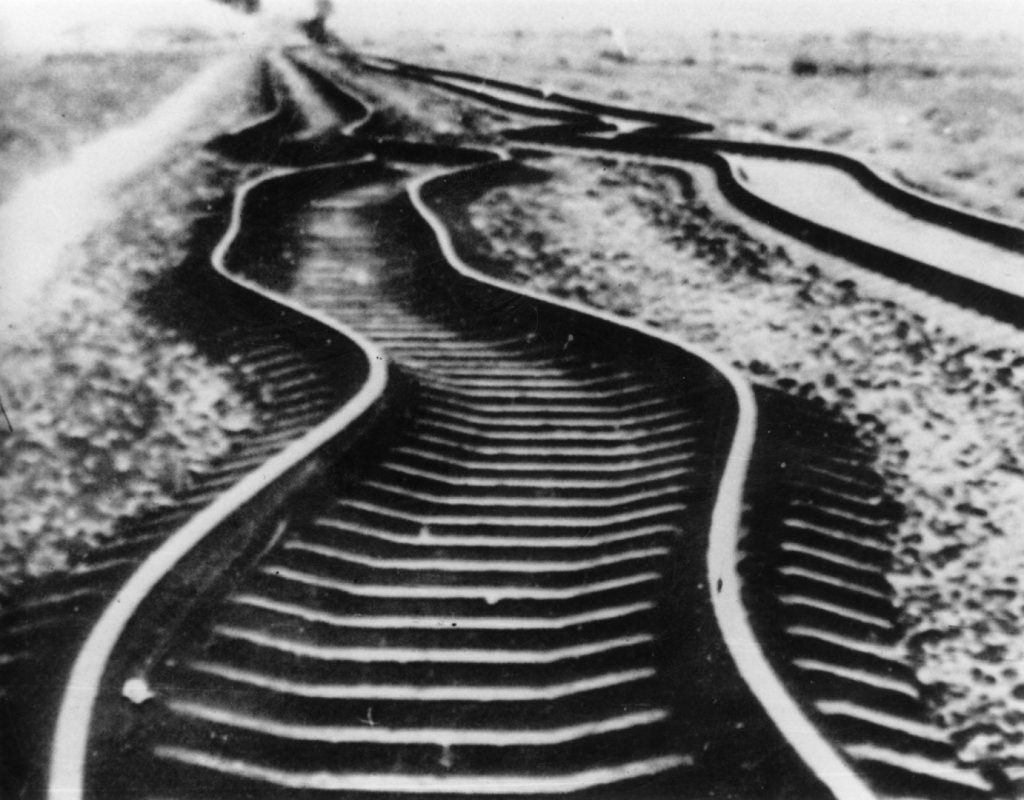
- Nearly half reported the sensation of their consciousness separating from their body, feeling that their personal image had detached from their physical body and floated into the air.
- About one third felt they were passing through a pit or tunnel-like space.
- About one quarter said their body seemed no longer to belong to them, with parts of their body scattered through space, then as if sinking into a bottomless abyss, surrounded by complete darkness on all sides.
- A feeling that “light was about to arrive.”
1993, Popular Medicine, Issue 5
Neuroscience Verification of the Reality of NDEs
In December 2001, The Lancet — the world’s most authoritative core scientific medical journal — published a near-death research paper submitted by Dutch cardiovascular surgeon Pim van Lommel. The article centered on the near-death experiences of 334 acute myocardial infarction patients between the ages of 26 and 92 treated by Dr. van Lommel and his colleagues between 1988 and 1992. Once published, this research generated enormous international medical attention and has been cited continuously (946 citations as of August 14, 2021).
In his research report, van Lommel pointed out: the out-of-body consciousness phenomenon — the most striking element of near-death experiences — simply cannot be explained through neurophysiological knowledge. This is because in many patients who experienced NDEs, they were already in a state of clinical death — the so-called brain-dead state. Heartbeat and breathing had completely stopped, sometimes for a very long period; brain waves had disappeared, and the entire nervous system had lost any physiological or pathological electrical impulses. If, according to the current scientific view, human consciousness is generated and operated through the physiological electrical activity of brain neurons, then when patients are in a state of clinical death, it would be impossible to have consciousness independent of the body, or any activity resembling thought — let alone the series of clear and orderly cognitive processes and remarkable sensations that frequently appear in near-death experience reports.
Van Lommel mentioned in his paper a 40-year-old heart disease patient. This person had a sudden heart attack and collapsed on a roadside lawn. A passerby saw him and immediately called an ambulance to take him to the hospital for emergency treatment. In the ambulance, the patient gradually lost all clinical vital signs, entering clinical death in the scientific sense. Van Lommel continued resuscitation efforts for a considerable period after the patient’s ECG and EEG had gone completely flat, and removed the patient’s dentures from his mouth while performing CPR. About an hour and a half later, the patient’s blood pressure and heartbeat were restored, but he remained in a deep coma. Several weeks later the patient regained consciousness. When he met Dr. van Lommel, he thanked van Lommel for his dedicated resuscitation efforts and told him he knew exactly where his dentures had been placed:
“When I was brought into the hospital, I saw you there — you took my dentures out of my mouth and placed them on a cart. The cart had many medicine bottles on it, and there was a drawer underneath; you put my dentures in that drawer.”

Dr. van Lommel was astonished, because he knew that throughout the entire resuscitation process, the patient had been in a state of deep coma or clinical death and could not possibly have had consciousness — or any cognitive ability — in the traditional sense. Through further conversation, van Lommel received from this patient the most standard near-death experience model: looking down from above at his own “corpse” on the hospital bed and the busy medical staff around him. The patient even described in extraordinary accurate detail everything that had happened while he “looked down” at the ambulance and resuscitation room — including highly professional resuscitation procedures. Van Lommel did not know how to explain this.
Of course, someone will always stand up and question that “these are all hallucinations that just happened to fit the specific facts.” To completely eliminate these statistically-based dismissals, Kenneth Ring joined forces with cardiac surgery specialist Michael Sabom to design a fantasy experiment: they invited a group of patients with heart disease and other serious illnesses to try hard to imagine themselves observing medical staff performing resuscitation on a patient, and to describe in complete detail the specific details of what they imagined.
The results of this experiment shocked those who cried coincidence: the experiment participants — who, as chronic patients regularly receiving emergency clinical treatment, had ample opportunity to observe such procedures — all made obvious errors in their descriptions. No one (unless the participant was themselves a medical professional) could accurately and completely describe the correct procedures for resuscitation. This experiment demonstrated: unless one had carefully observed firsthand the specific implementation of clinical resuscitation and its series of complex and orderly steps, relying purely on personal imagination based on rescue scenes seen in films and television, there is absolutely no possibility of describing professional resuscitation procedures so seamlessly. The results of this experiment formed an extremely sharp contrast with the precise descriptions that NDE experiencers were able to provide. The only explanation is that the experience of floating above the room and looking down at oneself receiving resuscitation — the so-called out-of-body experience — is something that truly and actually occurred.
This inference from that paper — “the out-of-body experience is something that truly and actually occurred” — was also confirmed by another study from a neuroscience perspective.
In 2014, the paper by Dr. Arianna Palmieri of the University of Padua in Italy studied the reality of near-death experiences from psychodynamic and electrophysiological perspectives.
(Personal aside: by coincidence, on a self-drive trip in Italy I took a wrong turn and ended up in Padova late at night. The next morning I discovered this quaint, historic university — reportedly Italy’s oldest — right next to the hotel where we were staying.)
The University of Padua research, building on conventional research foundations, took a novel approach — using differences in EEG wave patterns corresponding to imagined versus real memories to judge whether the experiences of NDE experiencers were real. The conclusion confirmed that the near-death experiences of these ten NDE experiencers were genuine memories rather than imagined memories.
I have created a Chinese summary for friends: Donghui · Zhao Yue: Research on the “Authenticity” of Near-Death Experience Memories: Evidence from a Combined Psychodynamic and Electrophysiological Study.
If friends discover other interesting research, please share it with me. I will continue to update this section.
Visual Impairment & NDEs in the Blind — Verifiable NDE Cases
To increase readability and engagement, I am including here several empirical cases that help understand the credibility of near-death experiences.
Visual Verification of Post-Death Consciousness from a State of Clinical Death: “My Dentures Are in That Drawer”
In December 2001, in his research report published in the famous medical journal The Lancet, Dutch cardiovascular surgeon Pim van Lommel described a 40-year-old heart disease patient. (This case is described in full detail above in the neuroscience section.)
Knowledge of Post-Death Consciousness from an Unusual Perspective During Clinical Death: Dust on the Surgical Light
In August 1984, University of Connecticut psychology professor Kenneth Ring, in his noted work Heading Toward Omega — In Search of the Meaning of the Near-Death Experience, described the near-death experience of a 48-year-old woman:
“Bang, I left, and then I was floating near the ceiling. Looking down, I could see the doctors’ caps and heads. I could identify my attending physician because his cap had a special mark on it. The scene was vivid and clear. I am very nearsighted — what others can see at 400 feet, I can only see from 15 feet away — so this was astonishing to me. They connected me to a machine that was behind my head. My first thought was: ‘My God, I can see! I simply cannot believe it — I can see.’ I could read the numbers on the machine, which was behind my head. Everything was bright and clear. From where I was, I could look down at the lamp shades — the tops of the lamp shades were dirty, covered in dust. I remember thinking: ‘I must tell the nurses about this.’ Almost as soon as this thought occurred to her, she returned to her body and regained consciousness during resuscitation.”
But the “memory” of dust on the surgical lights was something she could not forget, so she actually told the head nurse, and the nurses did indeed discover that the tops of the surgical lights had not been cleaned properly.
This case led Professor Kenneth Ring to fully believe in the reality of near-death experiences, after which he began collecting and studying more such verifiable cases, resulting in his noted work Heading Toward Omega — In Search of the Meaning of the Near-Death Experience.
Knowledge of Post-Death Consciousness from the NDEs of the Totally Blind
Inspired by this case — and also challenged by other readers (the woman’s vision, however poor, still existed) — Professor Kenneth Ring pushed his research on near-death experiences to a new level. Although the woman who had the near-death experience had extremely weak vision at only 0.3%, she did still have the possibility of seeing something. For a more scientific approach, could this experiment be pushed one step further to make it completely airtight — truly “seen” rather than through physical eyes? What kind of person — for those of us who are intellectuals — what method could scientifically eliminate even that 0.3% possibility? What kind of person? Correct — a blind person. If a blind person could see, that would be even more convincing. And what kind of blind person would be best — congenitally blind or acquired blind? A congenitally blind person who could see would be even better, wouldn’t it? This became his next book: Mindsight: Near-Death and Out-of-Body Experiences in the Blind.
With the true blind subjects — and look at the sample size of near-death experiences available now — it was large enough that he specifically sought out blind people, even congenitally blind people. How many did he manage to find? He found 146. And did these blind people see? Can you guess whether they saw? They did see — 80% of them saw. If these blind people 80% saw, what does that mean? Does it mean their physical body saw? It certainly cannot have been the physical body — it was something beyond the physical body that saw. And what makes the cases in his work particularly authentic? You cannot imagine how dark and disorienting the world of the blind is. Blind people have things they cannot describe, because some have been blind since birth. They can describe shapes — things they have felt — but there is one thing they cannot describe: color. So the particularly vivid cases tell us what these individuals truly saw. One hundred percent of congenitally blind individuals actually saw — and what was seeing, if not their souls?
NDE Case of a Person Born Totally Blind
The book describes in detail the near-death experience of Vicki Umipeg, a woman born totally blind (Vicki 1–8, Ring 1995). Vicki was born in California in December 1950. Because she was premature, she was placed in an incubator with an oxygen valve. At that time, excess oxygen in incubators caused approximately 50,000 premature American infants to go completely blind due to optic nerve damage between 1947 and 1952. Both of this woman’s optic nerves were destroyed, so she had never had any visual experience whatsoever. She had never seen light or shadow, had no concept of light or color, and had no visual imagery including light, shadow, or color even in her dreams. She had two near-death experiences. Here, let us first look at her experience of having visual perception for the first time in her life.
When Vicki Umipeg was 12 years old, she received emergency treatment for appendicitis and peritonitis. From near the ceiling, she looked down and saw her own physical body on a metal operating table, preparing to undergo surgery. She realized that was her body. She did not know what color was, but she noticed that the sheets on the operating table emitted light of different intensities (she later discovered these were colors — she did not see colors per se, but perceived variations in light. The recognition of color is impossible for the congenitally blind — this is an important point). She was then drawn into a dark tunnel. While passing through the tunnel, she saw people with bodily forms. She saw the faces and upper bodies of people ahead. The front of the tunnel shone with a brilliant light. Entering the light, her whole being felt that this was home. Then scenes from her past flashed back: at her school for the blind, her female friend Bunny (who had already passed away) was anxiously looking for a beloved crucifix of Christ that Vicki had stolen. In the experience, Vicki fully felt Bunny’s grief at that time. Vicki saw her own behavior as a blind person — for the first time in her life she was able to see. She was deeply moved with awe. The end of the tunnel was filled with light. She also saw flowers and grass. She met another female friend from her days at the blind school, Debby (who had also passed away). A neighbor, Mrs. Z. (who had also passed away), was there too. She also met another female friend from the blind school named Diane (who had also passed away). Diane and Debby looked happy and beautiful. Debby, who had been very heavy in life, was no longer overweight. Debby was overjoyed to see Vicki and stretched out both arms toward her. Finally, a figure appeared with a more brilliant light than the others (Vicki believed it was Christ), enveloping her with love and peace. That figure said: “You must go back and learn to love and forgive.” In the next instant, she returned to her physical body.
A Congenitally Blind Patient “Saw” the 14 Doctors Who Rescued Her
In the 1997 book The Other Side of Life: Exploring the Phenomenon of the Near-Death Experience, a remarkable case encountered by a doctor named Fred Schoonmaker in Denver, Colorado is described. During his time as cardiovascular director at Saint Luke’s Hospital, he reported that one of his female patients had an out-of-body experience during a near-death event. The patient was blind, but during her out-of-body experience she “saw” fourteen people in the room. Although she could not distinguish colors, during her out-of-body experience she “saw” objects and was able to accurately describe what was happening in the operating room. Dr. Schoonmaker said it was exactly as if this female patient had truly seen everything: her descriptions corresponded completely with the facts.
Conclusion & Afterword
To summarize: having written so much, I have attempted to review the current leading-edge research on near-death experiences — to answer the original question of whether near-death experiences are nothing more than hallucinations triggered by a brain that hasn’t quite died.
Although there is certainly the possibility that hallucinations can occur during near-death experiences, from the many cases presented here we should be able to see that more and more scholars from more and more angles have found that at least a considerable portion of near-death experiences can in fact be cross-referenced with the real world and can be confirmed or disproven. In other words, near-death experiences may be genuine experiences rather than hallucinations.
Does reading this give you any new insights? At the very least, my car accident and my research have led me to see the world in a completely new way — to see life, and to understand how I should live. You can see my personal motto: Facing Death to Truly Live.
Furthermore, if you wish to systematically understand life, understand life and death — especially where the soul goes — you are welcome to participate in the “Science and Wisdom of Facing Life and Death” public flipped classroom.
Winner NDE Commentary
One of the most interesting aspects of this article is that it appears to have been written for an audience that may know almost nothing about near-death experiences. Rather than assuming prior knowledge, the author takes the reader by the hand and walks through many of the foundational concepts of NDE research – the early hallucination theories, the development of modern scientific investigation, cross-cultural studies, and some of the best-known veridical cases. In many ways, this article serves as an excellent introduction to the subject for Chinese readers who may be encountering these ideas for the first time.
What also makes this article particularly compelling is that the author is not simply an observer or academic commentator. Zhao Yue reports having experienced a near-death experience himself following a car accident. Like many experiencers, he initially questioned whether what he had gone through could have been nothing more than a hallucination. That personal experience eventually led him into years of research and, ultimately, to the conclusion that at least some near-death experiences represent genuine experiences rather than products of a dying brain.
The section on Chinese near-death research is especially important. Following the devastating Tangshan earthquake, researchers interviewed survivors and found that their experiences contained many of the same elements reported by NDE experiencers around the world. Some felt their consciousness separate from their bodies. Others described moving through a tunnel-like space, experiencing darkness, and sensing that a light was approaching. These reports are remarkably similar to those documented in North America, Europe, South America, and elsewhere.
The article also highlights two of the strongest examples of veridical perception in the entire NDE literature.
The first is the famous “dentures in the drawer” case documented by Dutch cardiologist Dr. Pim van Lommel. A patient who had been clinically dead accurately described where his dentures had been placed during resuscitation – information he should not have been capable of knowing if consciousness had been completely extinguished.
The second is the equally remarkable “dust on the lights” case. During an out-of-body experience, a woman reported seeing dust on top of the surgical lighting fixtures, a detail that was later confirmed by hospital staff. These kinds of cases are difficult to dismiss as random hallucinations or lucky guesses because they involve specific, verifiable information that was later confirmed to be correct.
Perhaps the most important takeaway from this article is also the simplest one: people in China have near-death experiences too.
They describe leaving their bodies. They report tunnels, light, deceased relatives, life-changing aftereffects, and a profound loss of the fear of death. In short, they report the same kinds of experiences described by people in the United States, Europe, Latin America, Africa, and elsewhere.
Near-death experiences appear to transcend culture, language, politics, and religion. Human beings may tell the story using different symbols and different words, but the underlying experience remains remarkably consistent.
That consistency is one of the reasons the study of near-death experiences continues to attract increasing scientific attention around the world.
https://zhuanlan.zhihu.com/p/585722129
The source is Zhihu (知乎) — China’s largest question-and-answer and long-form article platform, roughly the Chinese equivalent of Quora. The URL confirms it: zhuanlan.zhihu.com — “zhuanlan” meaning “column” or “publication channel” on Zhihu.
Author: 东慧院·赵越 (Donghui Institute — Zhao Yue), who has 29,521 followers and 125 articles on the platform.
Date: The article itself is dated in the text as completed September 3, 2021, with references updated through August 20, 2021.
Location/City: Zhihu is a Beijing-based platform. The author does not specify their own city in what’s visible here, though the article references a car accident that prompted their research — consistent with biographical details elsewhere in the piece.
No traditional publication city is listed since this is a digital platform, not a print publication. For citation purposes – a Zhihu column article by Zhao Yue, published September 3, 2021, at the URL shown.
Want to go deeper? Don Winner brings decades of intelligence and investigative experience to the biggest question there is: what happens when we die.
In You’re Going to Die Someday, Right? Near-Death Experiences Reveal What Happens Next, he examines the evidence from thousands of near-death experiences to find out what they actually tell us about consciousness, the soul, God, and the afterlife.
In Hell Exists, But Only for the Living, he investigates where our idea of hell came from and who built it, tracing the doctrine back to its human sources.
Get your copy of You’re Going to Die Someday, Right? or Hell Exists, But Only for the Living.