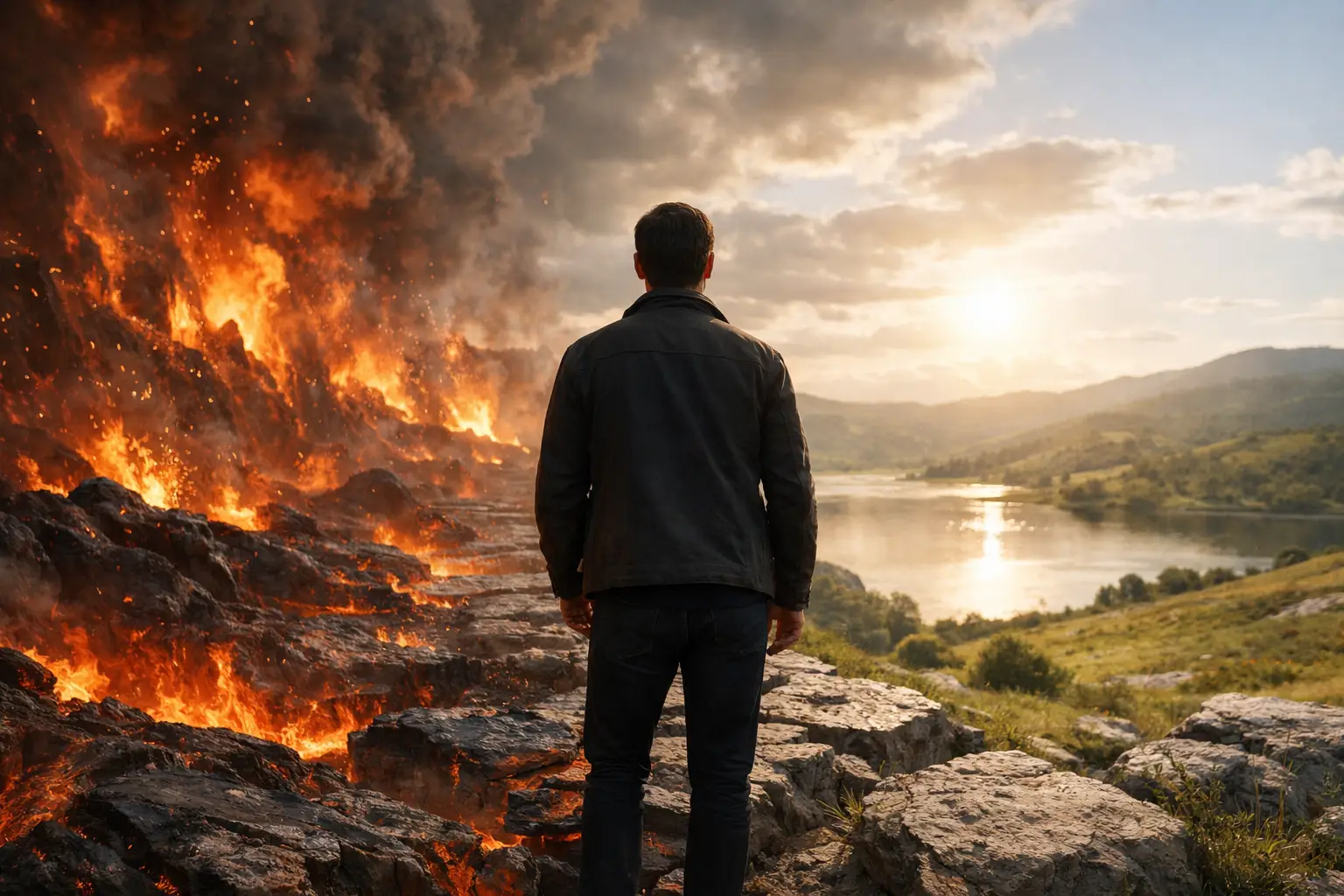
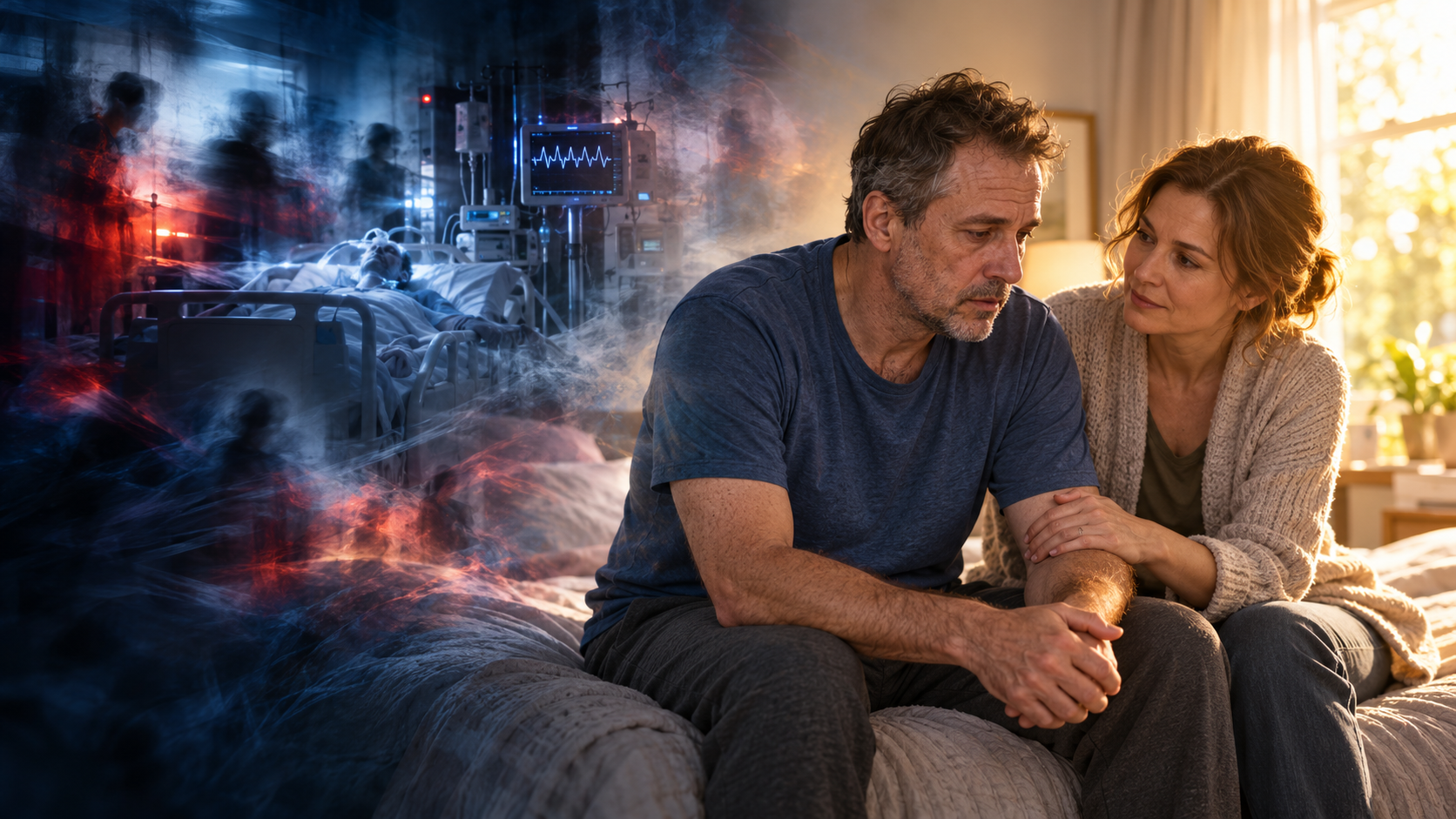
Someone you love survives a medical emergency. They come home from the hospital, and everyone is relieved. But something has changed. They have frightening memories they cannot explain, nightmares they cannot escape, or a fear of death that follows them through the day. They may be convinced that while they were unconscious, they visited hell. The medical community calls that ICU Delirium.
If that sounds familiar, this article is for you. It is also for the person carrying those memories. There is medical information that can help put these experiences into context, and there is another way to examine what you remember without assuming that it was a preview of your eventual destination.
I became aware of this problem while researching the origins of hell for my second book, HELL EXISTS, BUT ONLY FOR THE LIVING — The Origins of Hell. I kept encountering accounts of terrifying experiences during comas and severe medical emergencies. Some appeared in discussions of ICU recovery. Others appeared in podcast interviews presented as “hellish near-death experiences.” I wanted to understand what the people were actually describing and why the accounts were being interpreted so differently.
When Survival Is Only the Beginning
The immediate job of an emergency department or intensive care unit is to keep someone alive. Treat the infection. Restore circulation. Support breathing. Get the person through the crisis. That work saves lives, but surviving the emergency does not necessarily mean that everything returns to normal when the person leaves the hospital.
Post-intensive care syndrome, or PICS, describes new or worsening problems following critical illness. These can involve physical function, thinking and memory, or mental health. One survivor may struggle to walk across a room. Another may have trouble concentrating or remembering appointments. Someone else may be dealing with anxiety, depression, or post-traumatic stress. A person can have difficulties in several areas at once.
ICU delirium is related but different. It is an acute disturbance of attention, awareness, and thinking during illness. It can involve confusion, hallucinations, or frightening beliefs about what is happening. Some patients become agitated; others become quiet and withdrawn. Hallucinations are possible, but they are not required for delirium, and frightening memories are not required for PICS.
For this article, I am concentrating on the people who do remember frightening experiences. Researchers have documented ICU survivors who recall being threatened, attacked, suffocated, or deliberately harmed. Those memories can remain disturbing long after discharge. The person may know intellectually that the hospital was helping them while still remembering events in which they believed someone was trying to kill them.
These experiences can feel completely real. That is one of the reasons they are so difficult to explain to someone who has never had them. Telling a survivor to forget about it does not answer their questions or make the fear disappear.
When a Frightening Memory Becomes a Prediction
Recently, I met someone who told me about a relative struggling after a coma. According to that family member, he had returned with visions of hell, severe post-traumatic stress, and a conviction that what he remembered was what awaited him when he died. He would not talk about it or seek professional help. Instead, he was spending his days drinking.
I have not interviewed this man or examined his medical records. What I have is a family member’s description of someone they care about who is suffering. That description illustrates the problem I want people to recognize: a terrifying memory can become a belief that punishment is inevitable.
For someone raised to believe in eternal torment, an experience of hell may seem to confirm everything they were taught. They survived the hospital, but now they think they know what comes next. If they see that fate as unavoidable, their remaining life can become an exercise in waiting for it.
That conclusion deserves examination. Remembering hell does not establish that hell is your destination. It establishes that you remember an experience you interpreted as hell. Understanding what happened during the medical crisis gives us another place to begin.
Where My Investigation Led
The medical community has an extensive body of work on delirium, ICU memories, and the lasting consequences of critical illness. NDE researchers examine extraordinary accounts associated with brushes with death. I want these bodies of material brought into the same discussion, particularly when a survivor’s account is being presented as evidence of hell.
The label on an interview is not an analysis. A podcast can call something a near-death experience before anyone has examined the details. Being close to death does not settle the origin of every image remembered from the event. We have to examine the account itself.
In my research, I use the term Fear Coma Experience, or FCE, for the coma-related material I am identifying. I distinguish it from NDE material and from accounts containing both, which I call Welded Near-Death Experiences. The framework is FCE + NDE = WNDE. These are the analytical categories I am developing; they are not interchangeable with the clinical diagnoses of delirium, PICS, or PTSD.
Very often, when I examine an account promoted as a hellish NDE, I find FCE markers throughout it and no NDE markers. My classification in those cases is an FCE. The task is to explain that finding from the person’s own words and make the reasoning available for others to inspect.
The Details That Matter
References to physical sensation are central to my method. A person describes smelling sulfur, hearing screams, feeling heat against their skin, or suffering physical pain. Those are the kinds of elements I classify as FCE material. The setting may be called hell, but the description is full of experiences associated with having a body.
The same distinction applies to pleasant imagery. A warm breeze against the skin remains a physical sensation, even in a beautiful garden. Describing flowers and describing their fragrance are different pieces of testimony. Describing fruit on a tree is different from describing eating it and tasting its sweetness. Beauty does not decide the classification.
Communication supplies another comparison. In the NDE accounts I use as my baseline, people emphasize telepathic understanding: complete information arrives instantly, with emotional content, without a spoken exchange. That is different from a lengthy conversation described as successive questions and answers, spoken in the familiar human way.
The distinction requires listening to the explanation, not pulling out one word. “Jesus told me” does not supply enough information by itself. How did the person receive the message? Did they hear a voice delivering sentences, or did they describe an immediate, complete understanding? That is what I examine.
Sight occurs in both groups of accounts and requires particular care. Descriptions of panoramic perception, seeing in every direction, or colors beyond ordinary human vision are NDE markers in my framework. An ordinary visual scene needs examination alongside its other details. A person may describe seeing something and then describe its heat burning their skin. Those are separate elements to analyze.
Likewise, emotional feelings differ from physical sensations. Feeling love, grief, or remorse is different from feeling pressure, flames, or a blade against the body. The person’s words and the surrounding context tell us which meaning they are expressing.
A single sentence can contain elements assigned to different sources. That is why the method requires taking the testimony apart carefully. I am comparing individual details against separate bodies of NDE and coma-survivor accounts, then putting the account back together with an explanation of its composition.
Familiar Images in an Unfamiliar Experience
Religious imagery is another feature I examine. God appears as an elderly man with a white beard and robes. Jesus wears sandals. Angels carry golden swords. Demons administer punishments that resemble stories the person heard long before entering the hospital.
My interpretation is that coma imagery can draw on material already present in the living brain: memories, fears, expectations, religious instruction, and familiar pictures. That gives someone’s background a place in the investigation. It does not allow me to classify an account merely because the person is religious. The testimony still has to supply the evidence.
It also matters whether someone describes a human figure or identifies a radiant presence as God. Those are different descriptions. I examine the appearance, the communication, and the reported sensations together rather than letting the name of a religious figure decide the result.
There is a media problem here as well. When a podcast presents an account as confirmation of hell and punishment, it can reinforce that interpretation for both the audience and the survivor. The account may fit a preexisting belief perfectly, but fitting a belief is not the same as establishing the origin of the imagery.
Honesty Is Not the Issue
I want to be clear about what this analysis asks of the survivor. I accept these accounts as sincere attempts to describe remembered experiences. Someone can honestly remember terrifying events without having the information needed to explain where those memories came from.
The fear deserves respect. So does the person describing it. We can examine an interpretation while taking the suffering seriously, and we can consider a medical explanation without accusing anyone of fabrication.
That matters especially when someone has stopped talking. They may expect disbelief, ridicule, or another warning about eternal punishment. Family members can make room for a different conversation by listening without demanding that the survivor either defend the experience or dismiss it.
Getting Help With What Comes After
An explanation can offer a starting point, but persistent nightmares, intrusive memories, heavy drinking, and difficulty functioning deserve professional attention. A primary care clinician can help arrange assessment and referrals. Depending on the problems involved, care may include mental health treatment, physical rehabilitation, cognitive assessment, or an ICU recovery clinic. PICS has several dimensions, and recovery may require several kinds of help.
Tell the clinician about the hospitalization and the memories. The connection may not be obvious if the conversation only concerns sleeplessness, anxiety, or drinking. With the survivor’s agreement, discharge records, family observations, and any ICU diary may help place remembered experiences alongside what happened in the hospital. ICU diaries are used to help survivors connect memories with their care.
If heavy drinking has become part of the situation, ask for help with that too. Trauma and alcohol problems need attention together. Someone who has become physically dependent on alcohol should obtain medical guidance before abruptly stopping, because withdrawal can be dangerous. Family members can also seek advice about treatment options even when the person is not yet willing to participate.
You do not have to resolve every question about an experience before asking for help. Difficulty sleeping, frightening recollections, and problems getting through the day are enough to start the conversation. An account does not have to fit my framework for the person carrying it to deserve care.
You Survived. Your Future Is Still Ahead
My investigation continues. I want to make the comparisons and classification method clear enough that other people can examine them, apply them, and identify where they hold up or need improvement. I also want survivors and families to know that frightening experiences during critical illness have a substantial medical context.
The conclusion I have reached in my work is that the hell described in FCE accounts belongs to an experience generated during a crisis involving a living brain. I do not interpret it as an afterlife destination or a warning of future punishment. That is the meaning behind my book’s title: Hell Exists, But Only for the Living. Ironically, you can’t get there when you’re dead.
If you or someone you love came home carrying memories of hell, those memories do not establish that you are condemned. You survived a medical emergency, and there are people who can help with what followed. The experience deserves examination, the suffering deserves treatment, and your remaining life deserves more than waiting in fear.
Want to go deeper?
Don Winner brings decades of intelligence and investigative experience to the biggest question there is: what happens when we die.
In You’re Going to Die Someday, Right? Near-Death Experiences Reveal What Happens Next, he examines the evidence from thousands of near-death experiences to find out what they actually tell us about consciousness, the soul, God, and the afterlife.
In Hell Exists, But Only for the Living, he investigates where our idea of hell came from and who built it, tracing the doctrine back to its human sources.
Buy direct and support the Winner NDE Project. Signed first editions, $17.99 each, shipped by Don Winner.
Buy You’re Going to Die Someday, Right?Buy Hell Exists, But Only for the Living