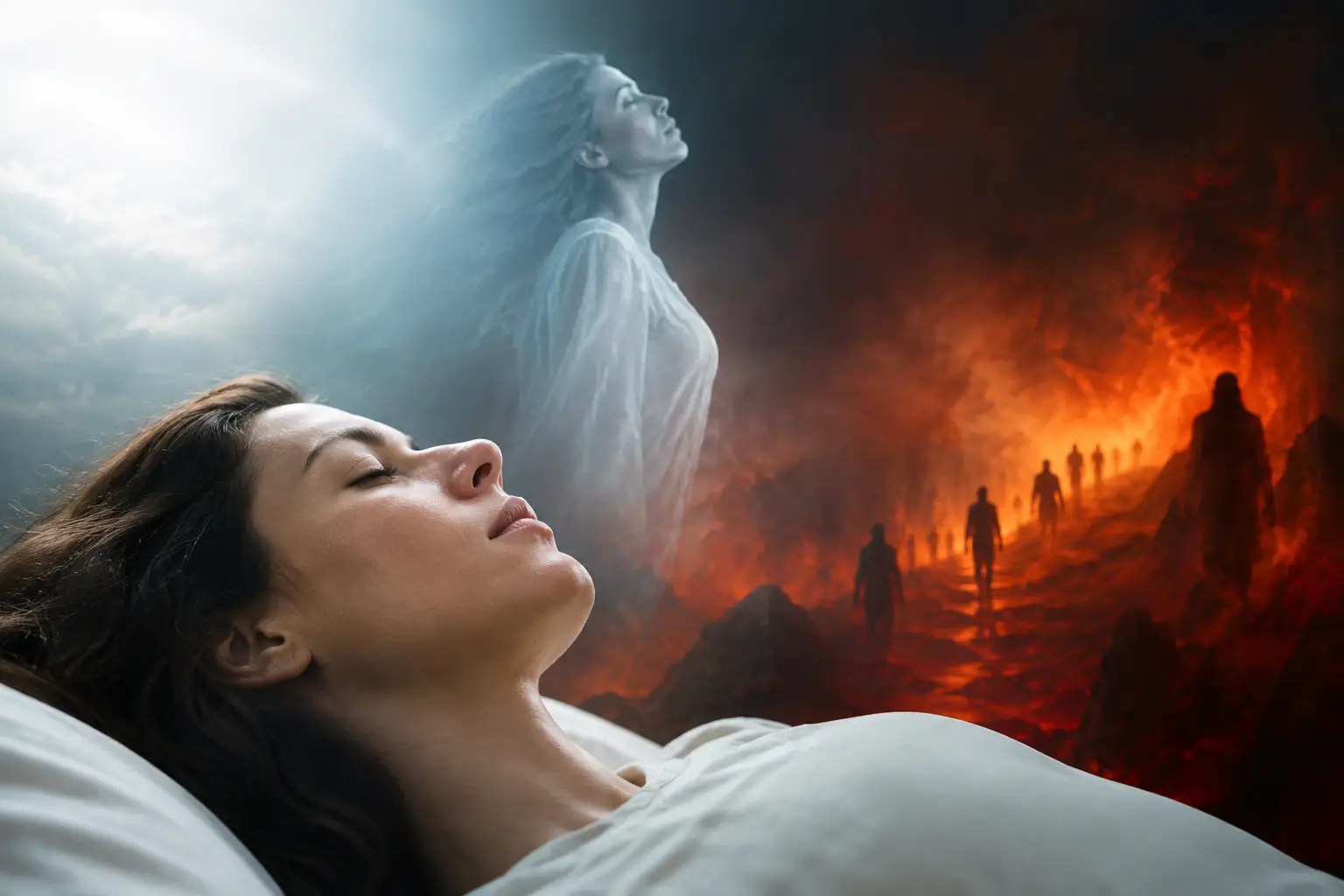

An oxygen monitor drops. A patient loses consciousness. Later, that patient reports an extraordinary experience. The skeptic reaches for a familiar verdict: oxygen deprivation NDEs are simply hallucinations caused by a dying brain. It sounds efficient. It also collapses the moment we ask the question an investigator is supposed to ask: which part of the reported event does oxygen deprivation actually explain?
Low oxygen can injure, confuse, terrify, and distort a living brain. That is not controversial. But an authentic NDE is not defined as a vivid memory after a medical crisis. It occurs during genuine clinical death and can include verified veridical perception – accurate observations made when the person had no functioning physical means to obtain them. Hypoxia may be part of the medical emergency. It is not an explanation for perception that should have been impossible.
Why Oxygen Deprivation NDEs Are a Category Error
The phrase “oxygen deprivation NDEs” smuggles in an assumption before the evidence has been examined. It assumes that every unusual experience around a medical emergency belongs in one bucket and therefore has one biological cause. That is precisely the error.
There are three different events that must be separated.
An NDE is an authentic near-death experience during verified clinical death. It is typically peaceful, coherent, and may contain perceptions later confirmed by people, records, or physical facts. The person is not merely frightened, sedated, or confused. The body has been left behind.
A Fear Coma Experience, or FCE, is the event old terminology wrongly called a “distressing NDE.” It is not an NDE at all. It is a terrifying experience generated by a living brain under catastrophe: severe illness, coma, trauma, delirium, fever, medication, or oxygen disruption. It can feel more real than waking life. That does not make it evidence of an afterlife punishment. Hellish imagery belongs to the living brain in terror, not to the world beyond death.
A Welded NDE is rarer and more complicated. A person may suffer an FCE during catastrophic illness and also have a genuine NDE during clinical death. With no ordinary sense of time available, the memories can be fused together afterward. The investigator’s job is not to sneer at the witness or force the account into a convenient theory. It is to separate the two events carefully.
Once those distinctions are made, the oxygen argument loses its false simplicity.
What Low Oxygen Can Explain
Hypoxia can explain a great deal about an FCE. A person whose brain is still alive but under extreme stress may experience panic, confinement, pursuit, grotesque imagery, time distortion, fragmented scenes, and overwhelming dread. The imagery may draw on personal fears, religious conditioning, trauma, pain, and the brain’s ancient survival machinery.
That explanation should comfort people who have been frightened by accounts marketed as proof of eternal torture. A terrifying experience during a crisis does not establish that anyone entered a realm of punishment. It establishes that a living human brain under catastrophe can create a convincing hellscape.
But this is where skeptics routinely overreach. Explaining fear, confusion, and bizarre imagery does not explain an authentic NDE’s reported structure or its evidential core. A mechanism that may account for disorganized terror cannot be casually promoted into an explanation for accurate, later-verified perception during clinical death.
The difference is not cosmetic. If a witness says, “I was trapped in darkness while I fought to breathe,” hypoxia may be highly relevant. If a witness accurately reports an event, conversation, object, or action occurring beyond normal sensory access while clinically dead, oxygen deprivation is not an answer. It is merely a medical condition listed in the chart.
The Evidence the Hypoxia Theory Cannot Carry
The materialist claim is usually presented as if it were a complete explanation: the brain lacked oxygen, therefore the experience was produced by the brain. That conclusion does not follow. It skips the evidence that must be accounted for.
First, timing matters. A low oxygen reading is not the same thing as a functioning brain capable of assembling an elaborate experience. Medical crises unfold in stages. Oxygen levels can fall before loss of consciousness, fluctuate during intervention, or be restored during resuscitation. A chart showing hypoxia does not identify the moment an experience occurred, much less prove that it was manufactured then.
Second, content matters, but not in the shallow sense of whether a story sounds beautiful or strange. Reports of peace, separation from the body, encounters, and a transformed view of life recur across cultures and circumstances. The pattern deserves investigation. It is not erased by saying that every human brain can hallucinate.
Third, verification matters most. An authentic NDE rises above testimony alone when the witness reports information that is independently confirmed and was inaccessible through ordinary senses. This is the load-bearing evidence. A hallucination theory has to do more than name a possible brain insult. It has to explain how a dead person’s consciousness acquired correct information from a location or event the body could not perceive.
It cannot.
That does not mean every story told after an emergency is an NDE. Far from it. Disciplined inquiry requires exclusions. A dramatic account without clinical death may be an FCE, a dream, delirium, a medication effect, a confused reconstruction, or an experience that cannot be classified with confidence. The standard should be higher, not lower, because the subject matters so much.
Why “Dying Brain” Is Not an Investigation
Calling an NDE a “dying brain experience” is rhetoric disguised as analysis. It assumes the conclusion that consciousness is confined to brain activity, then uses that assumption to interpret any contrary evidence.
A real investigation starts in the opposite direction. What was the patient’s condition? Was clinical death documented? What was observed from the outside? Which details can be independently checked? Did the account remain consistent? Are there details that could have been learned normally? What parts belong to fear and catastrophe, and what parts belong to the NDE itself?
Those questions do not weaken the case for life after death. They protect it from sloppy classification.
They also protect witnesses. Someone who reports an FCE should not be told they were shown their eternal fate. Someone who reports an authentic NDE should not be told that a low oxygen number on a monitor settles what happened to them. Both responses are intellectually lazy, and both can cause real harm.
When Fear and Death Are Welded Together
The Welded NDE is where careless language does the most damage. A person can endure the terror of a Fear Coma Experience while still alive and later undergo a genuine NDE in clinical death. When recalled as one continuous event, the terror can seem to stain the NDE and lead observers to label the whole account a “distressing NDE.”
That old label should be retired. It confuses two different realities: a living brain’s terror response and the peaceful experience of leaving the body in death.
The distinction is central to Don Winner’s Hell Exists, But Only for the Living. The argument is not that frightened witnesses are lying, exaggerating, or spiritually defective. They are reporting what they experienced. The correction concerns interpretation. Fear coma imagery is real, dreadful, and psychologically consequential. It is not a map of the afterlife.
For families facing illness, this matters more than academic terminology. A loved one’s frightening ICU memories may require compassion, trauma-informed care, and patient listening. They do not require fear of eternal damnation.
Ask a Better Question
The next time someone says oxygen deprivation explains NDEs, do not accept the sentence as a conclusion. Ask what, specifically, it explains. Does it explain confusion and terror in a living brain? Often, yes. Does it explain every reported NDE? No. Does it explain verified perception during clinical death? No evidence shows that it does.
Death is not made less serious by this conclusion. It is made less frightening. The evidence does not ask us to romanticize medical catastrophe or dismiss the terror of an FCE. It asks us to classify experiences honestly, investigate the strongest cases without flinching, and refuse to let a convenient slogan substitute for an answer.
Want to go deeper?
Don Winner brings decades of intelligence and investigative experience to the biggest question there is: what happens when we die.
In You’re Going to Die Someday, Right? Near-Death Experiences Reveal What Happens Next, he examines the evidence from thousands of near-death experiences to find out what they actually tell us about consciousness, the soul, God, and the afterlife.
In Hell Exists, But Only for the Living, he investigates where our idea of hell came from and who built it, tracing the doctrine back to its human sources.
Buy direct and support the Winner NDE Project. Signed first editions, $17.99 each, shipped by Don Winner.
Buy You’re Going to Die Someday, Right?Buy Hell Exists, But Only for the Living