On November 22, 2011, the Skeptiko podcast published episode 154, an interview between host Alex Tsakiris and Eben Alexander, under the title “Eben Alexander’s Near-Death Experience Defies Medical Model of Consciousness.” This one is audio only. No video. My analysis is based on the published transcript of the interview.
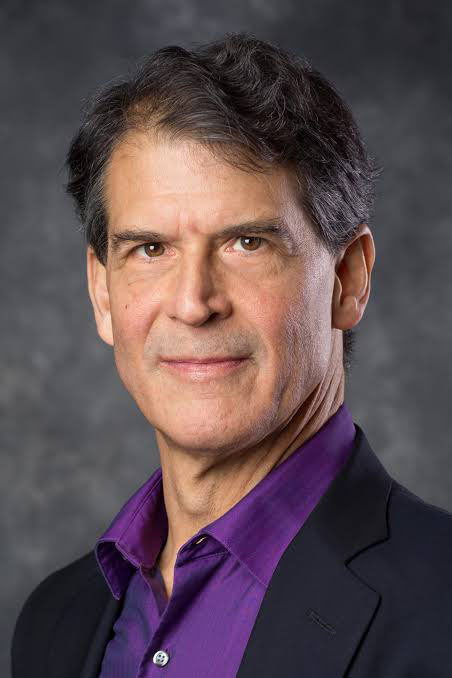
This is the second telling in the series, about six months after his appearance on Through the Wormhole, which I covered in Analyzing Eben Alexander, Part 1: Through the Wormhole (2011). The difference in length is huge. On television he had a few minutes. On Skeptiko he had close to an hour, and he used it.
The timing matters too. By his own count, he’d spent about three years working on his experience by the time of this interview. The book wasn’t finished. He didn’t have a publisher. His working title was Life Beyond Death: A Neurosurgeon’s Life-Changing Near-Death Odyssey. The book that became Proof of Heaven was still a draft on his computer. This is Eben Alexander before the bestseller.
The method is the same as Part 1. I take his testimony apart element by element, sometimes a few words at a time, and sort each piece. The rule underneath all of it is simple. If it’s something a physical body does, feeling, hearing, smelling, or sensing the passage of time, it comes from the coma. If it’s something only a soul free of the body does, it comes from the near-death experience. Part 1 explains the standards in full.
Starting with this article, I’m adding two things. First, a running tally. Each article counts the elements in that telling, how many are new, and how many repeat earlier tellings, along with a global total across every telling analyzed so far. Second, a third category of material at the end. Eben Alexander spends a lot of time talking as a neurosurgeon, applying his medical training to his own case. None of it describes the experience itself, so it doesn’t belong in the coma pile or the NDE pile. But he says a lot of it, so I’m documenting it separately.
Fear Coma Experience Elements: New
The Pounding – “There was a kind of monotonous pounding, a dull sound in the background pounding away eternally.” This is the first thing he hears in the underground place. A monotonous, dull, endless pounding. It’s a sound, heard with ears, and that puts it in the coma. “Eternally” adds the passage of time on top of it. Two coma markers in one sentence.
Faces Boiling Up Out of the Muck – “Every now and then a face, an animal or something would boil up out of the muck.” Faces and animals rising out of mud, then disappearing. This is earthly, grotesque imagery generated by a living brain under severe stress. It’s the kind of content people report every day coming out of ICU comas. Keep this phrase in mind, “boil up out of the muck.” It comes back later in the interview, and it matters.
The Chant or Roar – “And there might be some chant or roar or something. Then they’d disappear again.” A chant. A roar. Sounds again, heard by the living body in the hospital bed. Coma material.
Hymns From the Sky – “Above there were these arks of silver and gold light and beautiful hymns coming down from them. Indescribably gorgeous hymns.” Watch this sentence closely, because he welds both sources into it. The arcs of silver and gold light belong in the NDE section, and I’ll cover them there. The hymns are music, heard with ears. The hymns come from the coma.
The Warm Summer Breeze – “It was as if there was a warm summer breeze that just blew by. Then everything changed and the scene stayed the same but I became aware… of a Divine presence.” Another welded sentence. A warm breeze blowing past is something you feel on your skin. That’s tactile, and it’s coma material. The words right after it, his awareness of a Divine presence, belong to the near-death experience. He moves from one source to the other in the middle of a breath, with no pause.
Soup of Mixed Foam – “When I was in the earthworm eye-view, everything seemed to be one kind of soup of just mixed foam. It was very hard to put sequence on it.” His own word is “soup.” He describes the underground place as a mixture he couldn’t put in order. Sequence is time, and time belongs to the coma. If you’ve followed this series, you know I call a Welded NDE a soup salad. Here, in 2011, Eben Alexander uses the word “soup” to describe his own coma.
The Six Faces at the Bedside – “My awareness was of several faces. I remember one was my wife and one was a good friend of ours who is also my infectious disease doctor and a neighbor, Dr. Scott Wade. Then one was also my 10-year-old son. These faces were there. I did not recognize them. They would say words. I didn’t understand the words, but I had a very powerful visual memory. They would kind of boil up out of the muck and then they’d go away.” This is the most important passage in the interview. These are real people, standing beside his hospital bed on the seventh day, as he started to wake up. They spoke words he heard but couldn’t understand. And he describes them rising out of the muck in exactly the same words he used for the animal faces: “boil up out of the muck.” Same place. Same mechanism. His family in the ICU room and the animal faces in the mud came out of the same muck, and his family was physically in the room with his living body. The muck is the coma.
Susan Reintjes – “Her name is Susan Reintjes and she’s a friend of my wife’s… I remember her being there very clearly. I mean, just like all the rest. She was there and she never was physically there.” Susan Reintjes appears as one of the faces in the muck. She wasn’t in the room. His wife told him later that Reintjes had reached out to him from Chapel Hill. Whatever you believe about how she got there, he places her face in the same muck, alongside his family at the bedside. Same place, same mechanism, coma material.
The Nightmare – “In my book I go into great detail describing what I call the ‘nightmare,’ which was kind of a paranoid, crazy thing where I was halfway in and out of reality. My younger son, Bond, he can describe it to you. It was kind of a very frightening thing because I would seem to be with it and then I’d be saying things that were just out of my mind.” This happened as he woke up from the coma. Paranoia. Fear. Halfway in and out of reality. Saying things that made no sense. Doctors have a name for this: ICU delirium. It’s a common condition in patients coming out of comas, and his own son witnessed it. This is the living brain coming back online, and it belongs on the coma side.
Fear Coma Experience Elements: Repeats From Part 1
The Earthworm’s Eye View – “I call it in my book the ‘earthworm’s eye-view,’ because it really was just a crude, kind of underground.” Seen in Part 1. Coma.
Murky Earth Colors and Roots Overhead – “I have a vivid memory of dark roots above me.” Seen in Part 1. Coma.
Gross and Muddy – “It was just murky and gross.” Seen in Part 1. Tactile, coma.
A Very, Very Long Time – “It actually seemed to be years or eternity. I don’t know. It seemed like a very, very long time.” Later he refers to the pounding sound “that I’d heard for eons.” Seen in Part 1, and the time references are stronger here. Coma.
The Melody – “Then there was a spinning melody, this bright melody that just started spinning in front of me. Beautiful, beautiful melody.” Seen in Part 1. Sound, coma. One new detail: he calls it a “bright” melody, a visual word attached to a sound. The light is still hiding inside the music.
The Butterfly Wing – “For me, I was a speck on a butterfly wing.” Seen in Part 1. Coma.
Millions of Butterflies – “Millions of other butterflies around us.” Seen in Part 1. Coma.
From Part 1, Not Repeated Here
Ugly and Foreboding. In Part 1, he called the underground place “foreboding.” Here, he says this: “It sounds very foreboding to talk about it right now, but in fact, since I knew no other existence I don’t remember being particularly alarmed when I was in that setting.” He’s describing the same place, and now he says the fear came later, when he talks about it.
The Neurosurgeon Diagnoses Himself. In Part 1, I counted his statement about losing memory and language as a coma element. He repeats it here, almost word for word. Starting with this article, statements where the doctor diagnoses his own condition move to the new category at the end. I’ve adjusted the global count to match.
Fear Coma Experience Tally
This telling: 16 coma elements. 9 new, 7 repeats from Part 1.
Global total across all tellings so far: 17 coma elements. (8 from Part 1, with the self-diagnosis moved to the new category, plus 9 new here.)
Near-Death Experience Elements: New
Hyper-Reality – “It was as if the blinders came off and the reality there was much more crisp, real, and interactive and fresh than any reality I’ve ever known in this earthly existence.” More real than real. Experiencers say this again and again, in almost the same words. He even acknowledges it himself: “What I’ve found since then is that a lot of people who have had NDEs discuss the same kind of hyper-reality.” Near-death experience.
Indescribable Colors – “Waterfalls, pools of water, indescribable colors.” Colors beyond anything on earth, colors people struggle to put into words. One of the most consistent elements in clean near-death experience accounts.
The Girl on the Butterfly Wing – “Beside me on the butterfly wing was a beautiful girl. I remember her face to this day. Absolutely beautiful girl, blue eyes.” She’s his companion through the experience. Later in the interview he calls her “my guardian angel,” and says “she was always very comforting.” In this telling, he doesn’t know who she is. A guide who stays with you and comforts you is a near-death experience element. Note where she sits, though. She’s on a butterfly wing, which is coma imagery. Another example of the soup salad.
The Telepathic Message – “She never said a word to me and she was looking at me and her thoughts would just come into my awareness. Her thoughts were things like, ‘You are loved. You are cherished forever. There’s nothing you can do wrong. You have nothing to worry about. You will be taken care of.'” She never spoke. Her thoughts came straight into his awareness. That’s telepathy, the way all communication works in a near-death experience. He adds his language wasn’t working at the time, so the words are his own labels, applied after he came back. The message is pure NDE.
Arcs of Silver and Gold Light – “Above there were these arks of silver and gold light… I later came to call them ‘angels,’ those arks of light in the sky.” Beings of light. Here’s the other half of the hymns sentence. The arcs of light are the near-death experience. The hymns pouring out of them are the coma.
The Orb of Light – “I was there with that Divine presence that was not anything that I could visibly see and describe, and with a brilliant orb of light. There was a distinct sensation from me, a memory, that they were not one and the same.” A brilliant light, in the presence of the divine. Near-death experience.
Not Here to Stay – “When I got there they said that I would be going back.” Later: “They would always say, ‘You are not here to stay.'” Being told you’re going back, that it isn’t your time yet, is one of the most common messages reported in near-death experiences.
Lessons, and Becoming What He Was Shown – “They said there were many things that they would show me, and they continued to do that… Part of the lessons involved becoming all of what I was being shown.” Experiencers describe receiving vast knowledge, and understanding things by becoming them. Near-death experience.
No Time on the Other Side – “Time out there I can say is totally different from what we call time. There was access from out there to any part of our space/time.” This is the time standard from Part 1, confirmed by the experiencer himself. In the coma, the pounding went on for “eons.” On the other side, time didn’t work the same way at all. He describes both, in the same interview, without noticing the difference.
Deceased Loved Ones – “The layer upon layer of understanding and of lessons taught by deceased loved ones and spiritual beings. Of course, they’re all deceased loved ones.” Meeting deceased loved ones is a core near-death experience element. In this telling, he doesn’t name any of them.
Near-Death Experience Elements: Repeats From Part 1
The Meadow (the Garden) – “We were flying through blooming flowers, blossoms on trees, and they were all coming out as we flew through them.” Later: “that beautiful valley scene.” Seen in Part 1 as the meadow. The garden is back, with more detail: blooming flowers, blossoms, a valley, waterfalls, pools. And again, he’s flying through it on a butterfly wing. Soup salad.
Out of the Body – “I had no body awareness at all. In fact, I had no body awareness through this entire kind of deep coma experience.” Seen in Part 1. NDE.
The Light Appears – “It spun and as it spun around, it cleared everything away.” Seen in Part 1. The light’s function, hidden inside the melody. NDE.
Leaving This Universe – “Then we went out of this universe. I remember just seeing everything receding.” Seen in Part 1, with a new detail: everything receding as he leaves. NDE.
The Void – “Initially I felt as if my awareness was in an infinite black void. It was very comforting.” Seen in Part 1, and this time he uses the word “void” himself. NDE.
The Presence of God – “My awareness of a Divine presence of incredibly indescribable, kind of a superpower of divinity.” Seen in Part 1. NDE.
Seeing Everything – “The whole higher-dimensional multiverse was that this incredibly complex corrugated ball.” Seen in Part 1 as the multiverse laid out in front of him. NDE.
Love in Everything, Oneness – “This is not Eben Alexander’s consciousness aware of being in that space. I was far beyond that point, way beyond any kind of human consciousness, and really just one consciousness.” Seen in Part 1. Oneness, NDE.
Near-Death Experience Tally
This telling: 18 NDE elements. 10 new, 8 repeats from Part 1.
All 8 NDE elements from Part 1 appear again here.
Global total across all tellings so far: 18 NDE elements.
Back and Forth, In His Own Words
One more passage needs its own spot. He describes going back and forth between the two sources, more than once:
“I would find myself back at the earthworm eye-view. What I learned was that if I could recall the notes of that melody, the spinning melody, that would start the melody spinning again and that would take me back into that beautiful, crisp, clear hyper-real valley on the butterfly wing… it turns out that I would oscillate from this beautiful, idyllic place in the core, coming back down into earthworm eye-view, and it seems it was three or four times.”
The earthworm view is the coma. The Core is the near-death experience. In his own words, he moved between them three or four times. He’s describing the weld from the inside, without knowing it.
The Doctor on His Own Case
This is the new category. These are the places in the interview where Eben Alexander stops describing the experience and starts analyzing himself as a neurosurgeon would analyze a patient. None of it is coma material, and none of it is NDE material. It’s the doctor, looking back at his own chart.
His spinal fluid glucose. Normal runs 60 to 80. A bad case of meningitis drops it to about 20. His dropped to 1.
The odds. Spontaneous E. coli meningitis in adults in the U.S. runs about 1 in 10 million per year.
The neocortex. Meningitis is “better than anything else at really diffusely wiping out the neocortex,” with the counterargument of “some idling function at a deep level.”
His early hypothesis. Reduced activity in inhibitory networks, letting excitatory networks over-express, producing an illusion of hyper-reality. He studied cortical microanatomy and the connections to the thalamus and basal ganglia, and never found an anatomic distribution to support it.
His experience with coma patients. As a neurosurgeon, he knew coma patients generally remember nothing, and he used to explain away the exceptions with standard answers.
The earthworm place, diagnosed. “I think that that was the best consciousness that my brain could muster when it was soaking in pus.” This one deserves attention. The doctor looks at the patient’s earthworm view and attributes it to a diseased brain. On that element, the neurosurgeon and the framework agree.
Losing memory and language. “My first awareness was I had no memory whatsoever of my life. I had no language, no words.” The statement moved here from Part 1’s coma count.
His recovery, in clinical terms. Language returning, the auditory cortex and visual cortex “coming online,” Wernicke’s area “starting to come back up to speed,” a “very rapid return of cortical function.”
Rejected hypotheses. Memories formed right before or right after the coma. A brain “barely able to ignite real consciousness and then it would flip back into a very diseased state.” DMT. Ketamine. He raises each one and rejects it.
His training. “It probably took three or four weeks for a lot of my neuroscience and neurosurgical training to come back.”
The big picture. The brain as a “filtering mechanism,” quantum mechanics as “a huge part of the smoking gun,” reductive materialism, Descartes and Spinoza, Stephen Hawking, and the book Irreducible Mind as “the bible of this.”
What This Telling Shows
Six months after Through the Wormhole, with close to an hour to talk, Eben Alexander describes 16 coma elements and 18 near-death experience elements. Nine of the coma elements are new: the pounding, the faces and animals in the muck, the chant and roar, the hymns, the warm breeze, the soup of mixed foam, the six faces at his bedside, Susan Reintjes, and the nightmare of ICU delirium. Ten of the NDE elements are new: hyper-reality, indescribable colors, the girl on the butterfly wing, her telepathic message, the arcs of light, the orb, being told he’d go back, the lessons, timelessness, and deceased loved ones.
Every NDE element from Part 1 shows up again. The core of his near-death experience is holding steady.
And for the second time, both sources are present in a single account. By definition, an account containing both coma elements and near-death experience elements is a Welded NDE. This time, he also describes moving back and forth between the two, three or four times, and he describes his own family at his bedside rising out of the same muck as the animal faces.
Two tellings in, the result is the same. Eben Alexander had a Welded NDE.
Next up is the next telling on the calendar.
Want to go deeper? Don Winner brings decades of intelligence and investigative experience to the biggest question there is: what happens when we die.
In You’re Going to Die Someday, Right? Near-Death Experiences Reveal What Happens Next, he examines the evidence from thousands of near-death experiences to find out what they actually tell us about consciousness, the soul, God, and the afterlife.
In Hell Exists, But Only for the Living, he investigates where our idea of hell came from and who built it, tracing the doctrine back to its human sources.
Get your copy of You’re Going to Die Someday, Right? or Hell Exists, But Only for the Living.