
Analyzing Eben Alexander starts with a story you already know if you follow near-death experiences. A neurosurgeon who spent years on the faculty of Harvard Medical School. A seven-day coma in November 2008, caused by a rare and aggressive bacterial meningitis that overran the parts of his brain responsible for thought, memory, and language. Doctors gave him about a 10 percent chance of survival. He woke up, recovered, and told the world what he experienced while his brain was offline. His book, Proof of Heaven, went to number one on the New York Times bestseller list in 2012 and carried the subject of NDEs into millions of homes where nobody had ever heard the term.
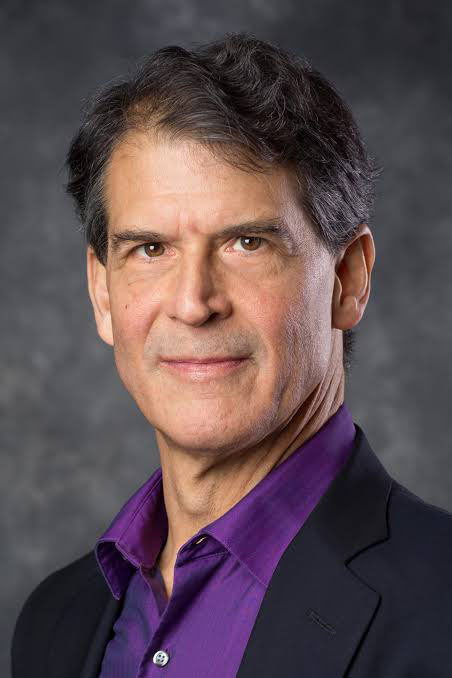
In the NDE community, Eben Alexander is royalty. He has told his story on stages, podcasts, and television for almost 18 years. People who attend IANDS conferences know his account nearly word for word. No single person has done more to put near-death experiences in front of the general public.
Today I’m starting a long project focused entirely on his account. This article explains what I’m doing, how I’m doing it, and why.
My Preliminary Conclusion
I’ve studied enough of Eben Alexander’s interviews and presentations to reach a conclusion of my own. I believe he had a Welded NDE.
If the term is new to you, start here: Welded NDE Category: winnernde.com Website. The short version goes like this. Some people who come close to death experience two separate things during the same medical event. One is a genuine near-death experience, the crossing over that thousands of people across every culture describe in the same terms. The other is a coma experience, generated by a living but badly damaged brain pulling from its own stored memories, beliefs, and programming. The person wakes up with both experiences fused into one continuous memory. No timestamps. No labels. Nothing to tell them where one ended and the other began.
I documented this pattern in detail in the case of Michelle Ledbetter. In her case, the coma half was a nightmare of fear and torment, what I call a Fear Coma Experience. Eben Alexander’s case runs the other direction. The coma brain generates comfort as well as fear, and much of what his living brain produced was beautiful. That beauty is a big part of why nobody has looked at his account this way before. Look at the case of Jodie Oviedo to see how a sick or injured brain in a coma can produce both hellish and heavenly imagery in the same event.
A Truthful Man and a Terrible Witness
I want to be precise about this, because it matters more than anything else in this series.
Eben Alexander is telling the truth. I accept every word he says as an honest account of what he remembers. I don’t question his sincerity, his integrity, or the reality of his experience. My own analysis confirms he crossed over and had a genuine near-death experience.
He is also a terrible witness to his own experience. This has nothing to do with honesty. It’s the nature of every Welded NDE. A man whose brain was being destroyed by E. coli bacteria for seven days, drifting between a coma and the other side with no clock and no way to mark where he was, has no means of knowing which parts of his memory came from which source. Nobody in his position would. He remembers one seamless journey because the weld made it seamless. So when he tells the story, he moves back and forth between the two sources from one sentence to the next, with no pause and no awareness he’s doing it.
My job is to separate what he himself cannot.
The Plan
I’m going to go through every recorded telling of Eben Alexander’s story I can find, one at a time, in chronological order.
I’m starting with the earliest interview or presentation available, whatever it turns out to be, and moving forward in time from there. I’m not starting with his book. A book is a finished, edited product. The first time a person tells a story out loud, before they’ve had time to think, rehearse, and polish, is the rawest version you’ll ever get.
I learned this from Michelle Ledbetter’s case. In her first podcast interview, she mentioned a small personal detail from her accident. She never mentioned it again in more than 30 later interviews. The detail was true. She dropped it because it was embarrassing and didn’t serve the story. Every honest storyteller does this. Over hundreds of tellings, people adjust their sentences, sharpen their word choices, drop what feels unnecessary, and settle on the version that makes the most sense to them. Eben Alexander has had almost 18 years to do this. His account today is tight, well organized, and delivered with the confidence of a man who has told it hundreds of times. Starting at the beginning lets me see what the account looked like before all that refinement.
For each telling, I’ll take the account apart element by element and trace each piece to its source. Then I’ll put it back together according to the framework and compare it with every telling before it.
The method rests on a simple principle. Near-death experiences converge. Across thousands of accounts, in every culture and every century, people describe the same core elements in the same way, because they’re describing the same place. Coma experiences diverge. A living brain cut off from the outside world builds its content from the life it has already lived: the person’s upbringing, beliefs, reading, and memories. The result is personal and one of a kind. Every element in Eben Alexander’s account traces back to one source or the other, and each one carries the fingerprint of where it came from.
I’ll explain the method in general terms as I go. The full procedure, step by step, goes in the final article, once the whole job is done and you can see the entire thing at once.
One piece of evidence deserves a mention now. The strongest proof of my conclusion comes from Eben Alexander’s own description of his first days after waking from the coma. I’ll get there.
Why Do It This Way
I think I already know what’s going on with this account. A preliminary conclusion isn’t enough, especially about the most famous NDE of our time.
The purpose of this series is to test my conclusion against everything Eben Alexander has said in public, and to keep testing it until nothing is left. I want every element sorted, every telling examined, and every conclusion supported by his own words from his own interviews. The goal is zero room for doubt from any direction. If the evidence contradicts me somewhere along the way, I’ll say so in public.
I expect the early installments to be long and detailed. I expect the later ones to get shorter. At some point I’ll open a new interview and find nothing I haven’t already seen a dozen times. Those short articles will matter as much as the long ones. Each one documents another telling examined, and another confirmation the account holds together the same way every time. I’ll keep going until there’s nothing left to analyze.
When the work is done, I’ll publish a final article documenting the entire process, the full method, and every conclusion, all in one place.
You’re Invited
If you know Eben Alexander’s story, and many of you know it better than I do, you already hold the raw material for this project. Follow along. Run your own memory of his talks and his book against the framework as I apply it. If you find something I’ve missed, or an interview I haven’t covered, email me. I want every telling, every clip, every interview. The more complete the record, the stronger the result.
A Word About Respect
Eben Alexander deserves respect, and this series will treat him and his experience with it. He went through something terrible, survived against the odds, and spent the rest of his life trying to explain what he found on the other side. His work opened the door for millions of people to take near-death experiences seriously, including many who first heard the term because of him.
His status won’t influence my conclusions. The evidence decides those. But the way I handle his account will reflect the respect he has earned.
All installments will appear under a new category here on the site: Analyzing Eben Alexander. The first analysis covers the earliest telling of his story I’ve been able to find.
Let’s get started.
Want to go deeper? Don Winner brings decades of intelligence and investigative experience to the biggest question there is: what happens when we die.
In You’re Going to Die Someday, Right? Near-Death Experiences Reveal What Happens Next, he examines the evidence from thousands of near-death experiences to find out what they actually tell us about consciousness, the soul, God, and the afterlife.
In Hell Exists, But Only for the Living, he investigates where our idea of hell came from and who built it, tracing the doctrine back to its human sources.
Get your copy of You’re Going to Die Someday, Right? or Hell Exists, But Only for the Living.